We learned how to create a Facebook business page, set up your page, and assign Facebook roles in the last blogs. Once your page is set up and has sufficient posts, it is time to advertise it on Facebook.
How to Promote Facebook Page?
Go to your page
Click on Promote to set up the advertisement
Advertise Your Business on Facebook
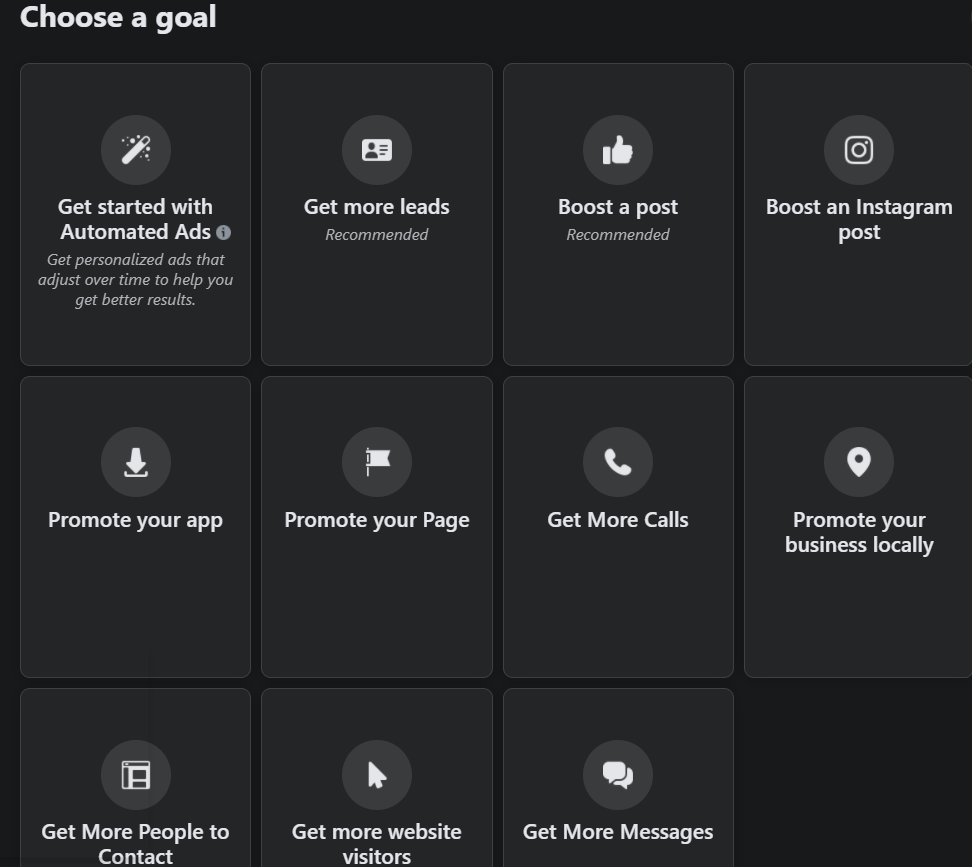
Choose Facebook Ad Goal
Why do you want to promote your page? What is the end goal? Let’s assume our goal is to increase website visitors, then select “Get More Website Visitors.“
Set a Facebook Ad Goal
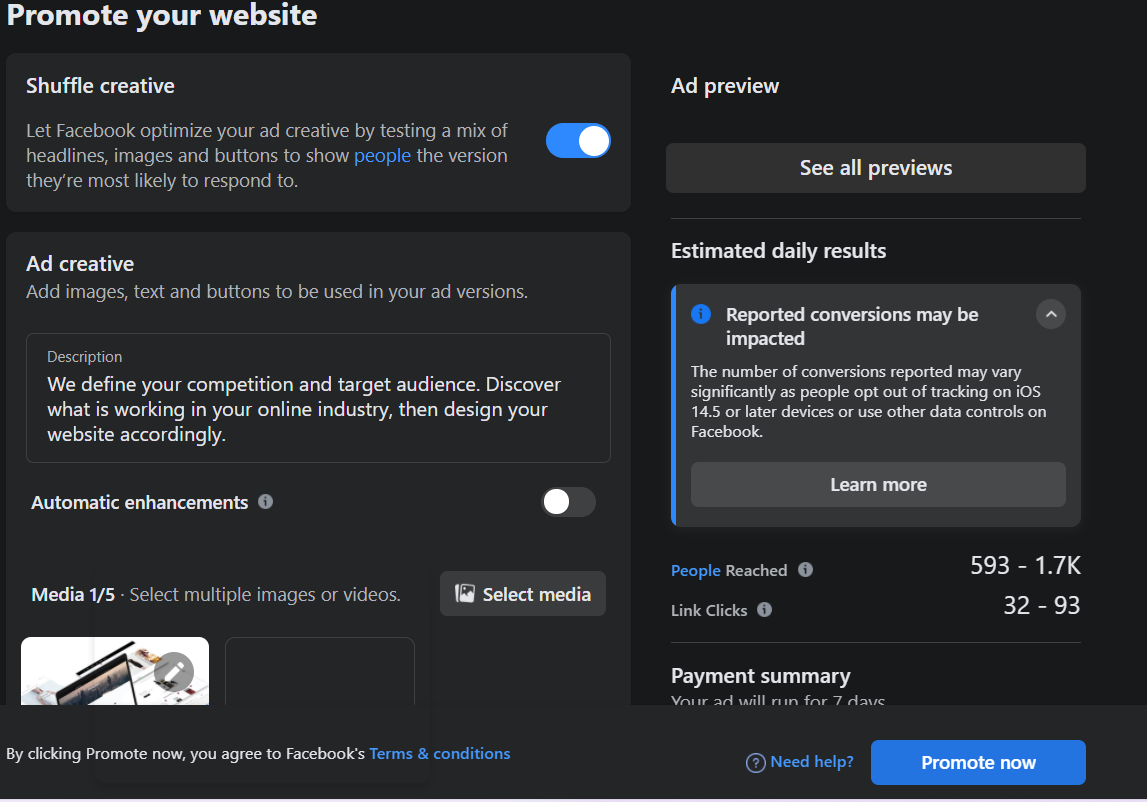
Promote Your Website
Click on Shuffle creative to use a default Ad template. It is recommended as the template is per Facebook Advertisement guidelines and more user-friendly.
Setup Profile
Click on select media to upload an image or a video to be displayed as an Ad. Facebook makes it possible to browse media from existing page media or the linked Instagram account.
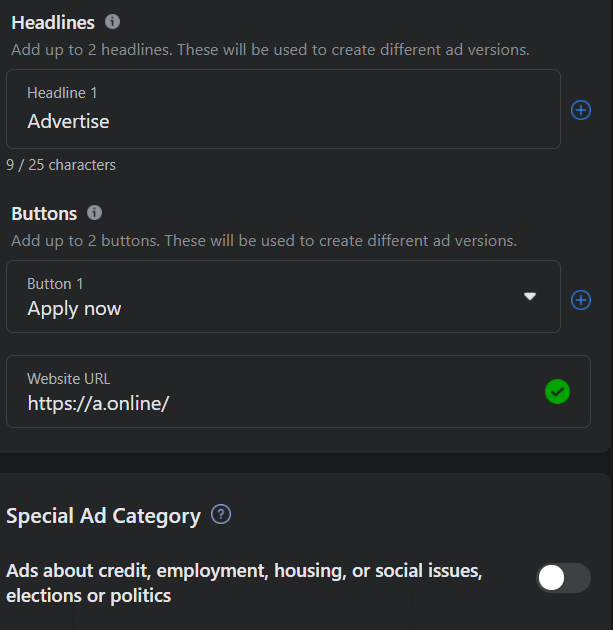
Enter Ad details like Headlines, Buttons type (click now, book now, contact us etc.), and Special Category type if the advertisement is about credit, employment, housing, social issues, elections or politics.
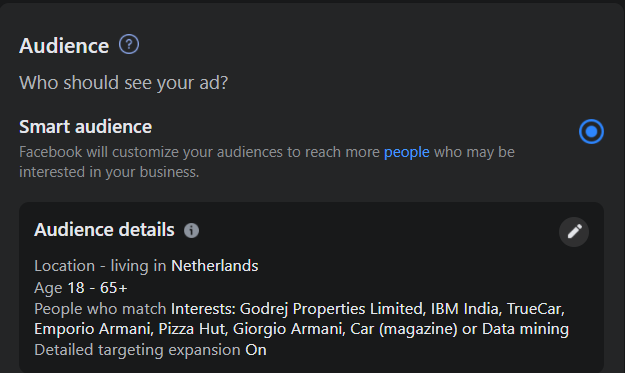
Select Target Audience
Insert Ad Data
Add Duration & Payment to a Facebook Ad
Audience
Add Duration and Add Payment to a Facebook Ad
Ad Duration: Select the duration of the Ad. More the duration is the cost, and more is the reachability.
Payment Method: Once the Ad duration is set, it’s time to set up payment so that the Ad is active and running.
After making the payment, Facebook notifies you with payment confirmation and activates your Ad.
More traffic to your Facebook page indicates that your business is expanding, which is beautiful. Still, it also means you have a more outstanding obligation to serve your consumers with better content that could be handled easily with Facebook page roles. To manage the page more effectively, you need a Social Media strategy and more resources.
What are different Facebook page roles, and How do you Manage Facebook Page roles and responsibilities?
When you create a Facebook business page for your business, you automatically become the page’s admin. A page admin has full access to the functionalities of a Facebook page and can create or assign different roles.
Facebook Page Role Management Page
Facebook PageAdmin
Supreme Admin Rights
Page and Role Creation & Management
It is automatically assigned to the account from which a page is created.
Access to every detail and functionalities that an admin can perform except:
The editor can’t have Supreme Admin Rights.
The editor can’t create or assign roles & Manage them.
The editor can’t manage page settings.
Editor Role posted by the Page Admin.
Unlimited people can be appointed as Page editors.
Facebook Page Moderator
As a Moderator, you are limited to the functionalities compared to Admin and Editor. An Editor can’t post on the page as the page but can reply to comments made by customers and admirers on a post.
Moderators can’t have Supreme Admin Rights.
Moderators can’t create or assign roles & Manage them.
Moderator can’t manage page settings.
Moderators can’t post as a page or post on a page.
Moderators can’t publish & manage jobs.
Moderator can’t Enable job features for a post.
Facebook Page Advertiser
Creating advertisements and sponsored media is becoming highly crucial to Facebook business pages. An Advertiser can only:
Create promotions, promos, or boosted posts.
Access to earnings data.
Access to other KPIs and Metrics.
Look at the Page Quality tab.
Look at who published the post as the page.
Facebook Page Analyst
The analyst role is pretty limited to only viewing insights of the page and do not have any actionable functionalities.
1st January, formerly known as the New Year, is the most anticipated and awaited festival that is celebrated on the same date and at the same time throughout the world. New Year arrives with the bulk of feelings and emotions that are for the Past and also for the Upcoming Future as well. New Year refers to saying goodbye to our Past Year and welcoming our upcoming New Year.
Today, we are going to say goodbye to our Past Year – 2021 and will be welcoming our New Year – 2022 while getting acknowledged about – How New Year is celebrated in the Netherlands. Here we go.
New Year Fireworks
Distributing Good Luck cards –
From 26th of December to 31st of December, Dutch people use to distribute the greeting Good Luck cards to their loved and known ones for wishing them Good Luck for their upcoming New Year. They show affection towards their loved ones by greeting them with best wishes to make a more precise place in their hearts.
Fireworks throughout the Country –
Bird Eye View of New Year Fireworks
From burning Christmas trees as the Public bone-fires to burning crackers, Netherlands’ streets are full of crackers and pleasure in the New Year’s evening. Loud noises due to fireworks can be heard days before New Year’s evening in the Netherlands. Due to its traditional importance, fireworks are allowed before 3 days of the New Year for celebrating upcoming New Year happiness.
New Year’s Dive –
A tradition that has been kept on performance for decades is the dive to the Sea or any Pond after the New Year. Performed with huge gatherings on around 200+ locations, Dutch people use to start their New Year with the refreshing Dive to their nearest dive to the Sea or any Pond with the mindset of entering New Year with the refreshment. Scheveningen is the district of Hague in the Netherlands where New Year’s Dive is performed in huge gatherings with the highest participants across the Country.
Corporate Body’s New Year practices –
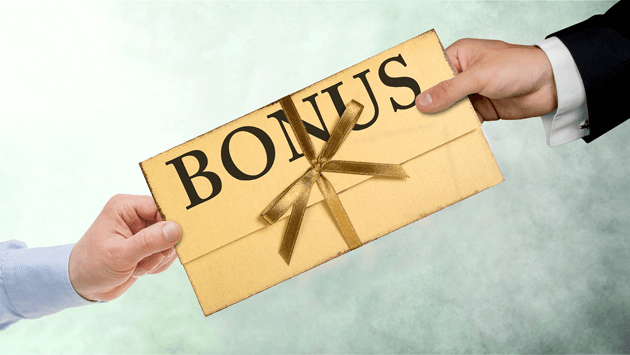
New Year Bonus
On the occasion of New Year, Employers of different Companies gives employees some extra bonuses in their monthly incomes as gratitude for being so hard-working throughout the year. This also builds encouragement among employees to work harder this year. In many companies or corporate bodies, New Year reception parties are being held throughout the whole 1st week of the New Year. People having jobs like – Sweepers, Newspaper sellers often use to visit door to door at their areas of work for receiving a tip as a bonus for their services throughout the past year.
Oudejaarslot –
An Oudejaarslot is a lottery ticket that is used as a tradition among Dutch people in the Netherlands for checking their luck. This is a special Dutch lottery ticket that is at its peak on the New Year evening and people use to buy it with the expectation of becoming Multimillionaires by the start of the New Year. It is quite exciting among people due to having the highest jackpot lottery time of this ticket.
Oliebollen –
Oliebollen is a Dutch food that consists of deep-fried dough balls that are consumed on the days starting from Christmas to the New Year but traditionally, it is consumed on the New Year’s evening. Olibollen is present in major part of the Netherlands’ food stalls beside streets and shopping complex and the person selling is known as – Oliebollenkraam.
Welcome To 2022!
New Year traditions in the Netherlands are indeed quite impressive and exciting. Wish you all a very delightful and exciting Happy New Year..!!
We are no longer in the days of long banners and hundreds of paper pamphlets; instead, we are in the Digital Era, which is likely to be the finest for business in the past century.
The Internet makes it simple; your content is available to the global audience with a single click. If you want to expand the reach of your business, nothing beats social media as a beginning point. Since almost everyone is a user of Facebook in one way or another, it’s frequently more convenient and familiar than utilizing a website builder or blog.
Adding Facebook as a marketing platform could solve two problems at a time; one Facebook page acts as a social networking tool and a company website; Second, it simplifies, eases, and reduces the cost of developing an online platform.
How to Create a Facebook Business Page?
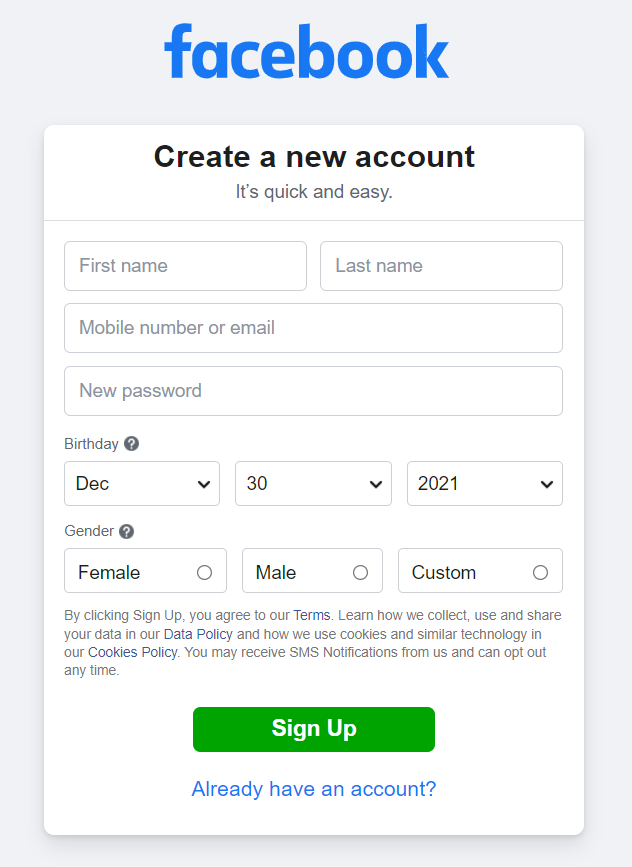
To build a Facebook Page, you must first have a Facebook account, which may be a business or personal account.
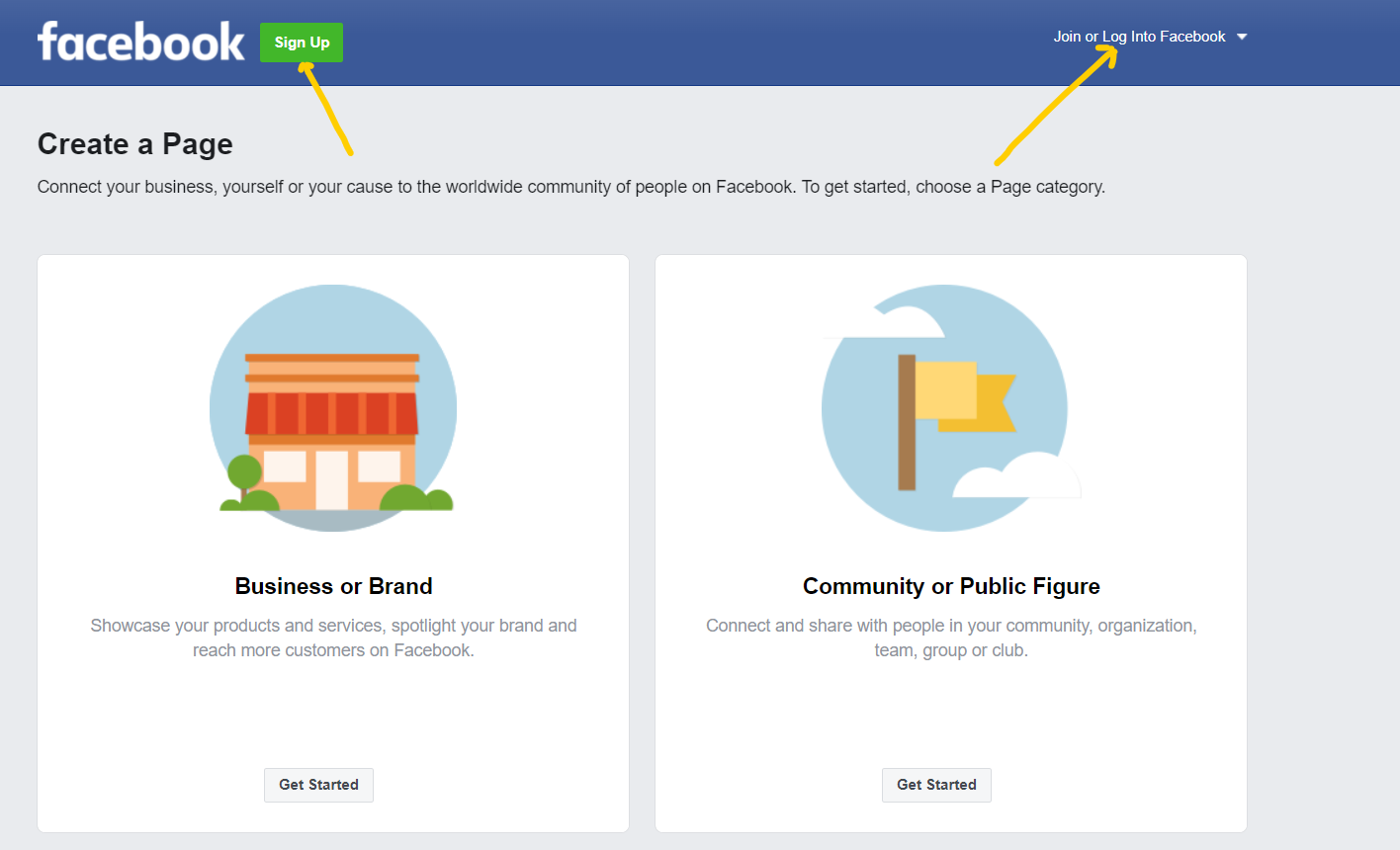
Facebook LoginFacebook Sign-upCreate a Business Account Facebook Page Login & Creation Process
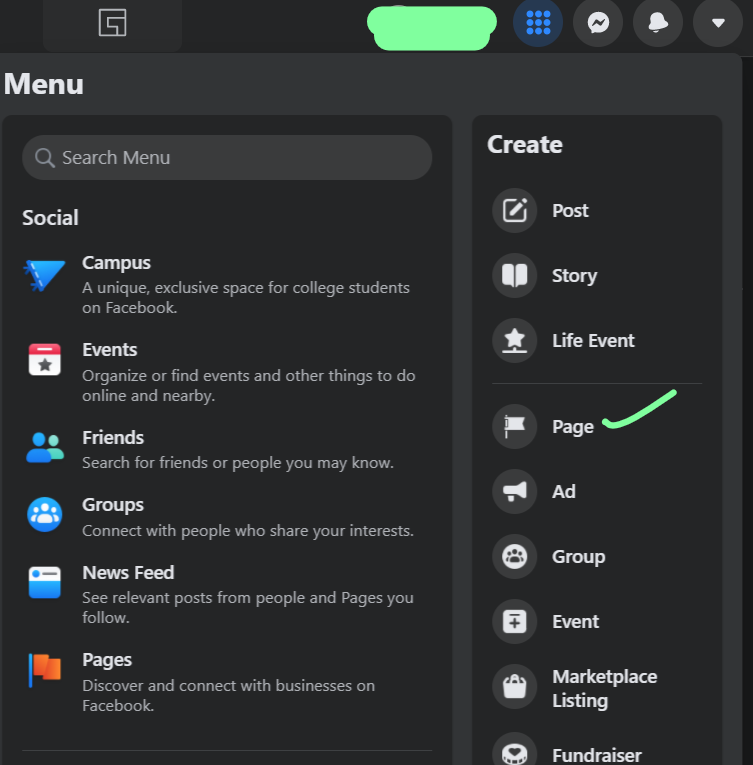
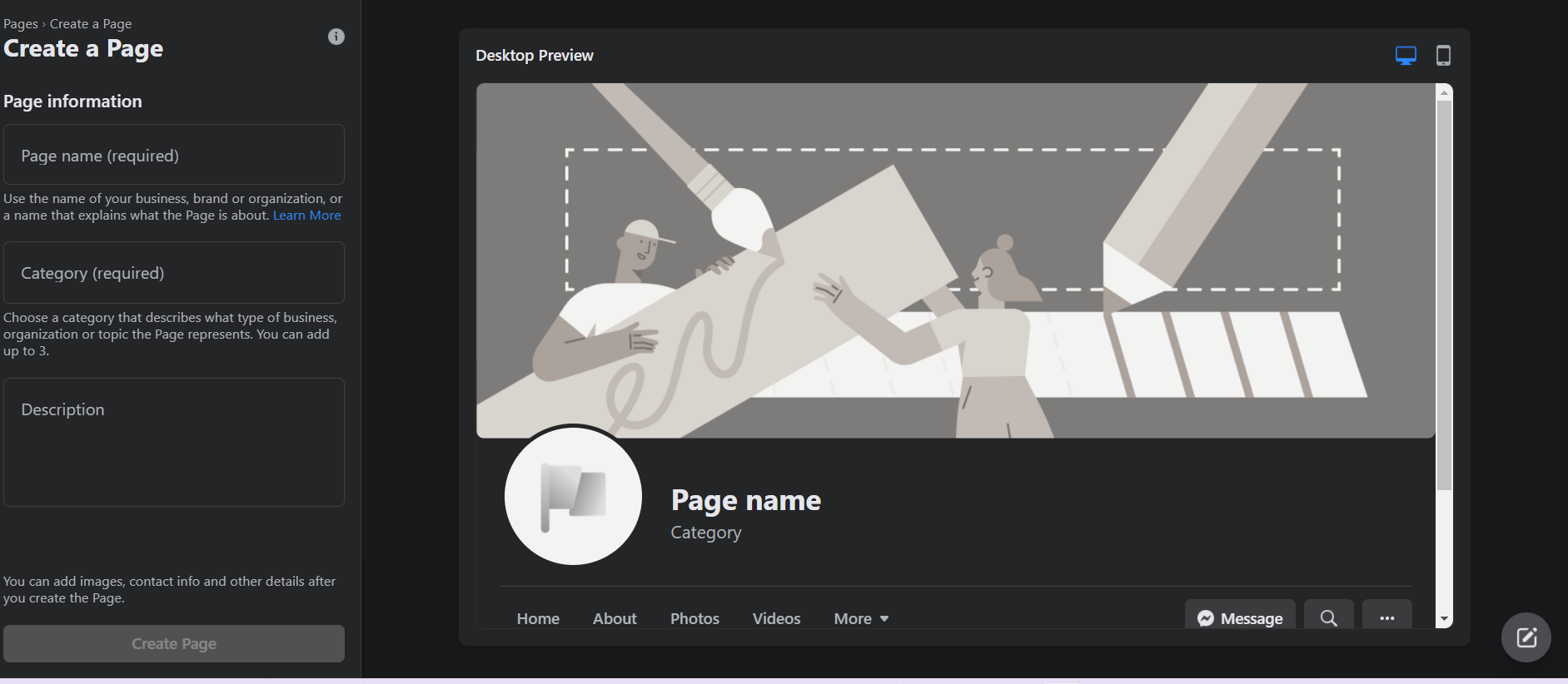
Once you are logged in on Facebook, go to the Home page. On the right-hand side, there is an icon with 9 dots. Click on that, and soon a screen will pop up in front of you. There is a Page option on that screen on the right-hand side column. Click on the Page option, and you will be directed to a new screen where you can enter your page details.
Home Page: Create a New PageNew Page Setup
What information to Add to your Facebook Business Page?
Setting up a business page is straightforward; add the relevant information you want your consumers to see. Remember that more transparency fosters consumer trust.
Enter your Business name
Enter Business Category, such as Business consultant, Marketing agency and so on.
Tell viewers your business, and use a clear and short description.
Once all required information has been entered, click on the Create a Page button.
We learned how to create a Facebook page for business use in the previous blog. Once your Facebook page is up and running, it’s time to populate it with relevant material and an eye-catching profile.
Setup Your Facebook Business Page in Simple steps
Upload company logo
A successful logo does not have to be extravagant or colourful; instead, it serves as a messenger, conveying your message to your target audience. As per Facebook terms and upload requirements, the logo size must be at least 180×180 pixels.
Instead of adding extra roles on a business page, it is recommended to create a company account and connect it to the page or create a page on this company account. Facebook has multiple roles, excluding admin roles like Editor, Moderator, Advertiser and Analyst, that can be assigned easily if you decide to hire a freelancer or outsource a marketing company.
Role Manager Facebook
Setup basic information
Basic company information such as email address, website address, contact number etc., would allow visitors to contact you if you are not active on messenger.
The Netherlands is the most chosen and favorite country among IT companies whose requirement is to expand their Business in Europe.
It is reported that all the Business or IT companies that invest in the Netherlands receive surprisingly whooping results in return because of the best workforce and infrastructure present in the Netherlands that fulfills all the requirements of IT Industries.
Let us understand why the Netherlands is termed as a Digital Leader
Dutch Governments supports the Tech –
Government plays a major role in expanding or in the reduction of any source or resource. But, the Dutch government has given a digital structure to the Netherlands by providing a strong focus towards the tech which includes – Innovative new techniques, multilingual workforces, a new culture for working arenas, and R&D incentives. This only makes it very clear about the vision of the Dutch Government that is most obviously to support the Tech.
World’s leading Data distributor – The Netherlands –
The Technological environment is ranked as No. 2 of the Netherlands in Net Connectivity all over the world with 98% of the houses having Broadband connections.
Most importantly, the Netherlands is the home of the world’s largest and leading Data distributor in the world – Amsterdam Internet Exchange (AMS –IX), which allows companies to stay digitally connected to reshape the future
Netherlands is the choice ofInformation Technology leader’s
The Netherlands’ technological environment is so overwhelming that big IT Companies like – Oracle, Microsoft, Google, IBM, etc. choose the Netherlands as their main European headquarters for R&D facilities and also, for customer services too due to their best and hardworking workforce. From Start-Ups to MNCs (Multi-National Companies), all the Tech companies from all over the world find Dutch IT industries as their great success.
Europe’s largest Cyber Security Cluster is in the Netherlands –
The Netherlands is Europe’s largest Cyber Security Hub while maintaining its role as the global beacon of Peace and Justice. The National Cyber Security Centre (NCSC) is the Dutch central information hub and center of cyber security expertise that encourages cooperation in-between businesses and governments towards digital resilience for the Dutch Societies.
Europol, NATO, and many similar international security agencies are attracted towards this expertise and have established their operations in the Netherlands.
Having a national network of 300+ public and private organizations that are working together to accelerate the Cyber security solutions, The Hague Security Delta (HSD) makes the Netherlands the Home of Europe’s largest security cluster.
The Netherlands is no doubt the leading Digital Leader with all the latest and advanced expertise and technology.
Having a rough idea about Dutch Tax Ruling in the Netherlands may not be very beneficial to you. Nobody wants to be relying on shallow knowledge and having in-depth knowledge about the Dutch Tax Ruling in the Netherlands will do wonders for you. So let’s get all the knowledge we have!!
Here’s How the Dutch Tax Ruling in the Netherlands work?
The most common way to apply the Dutch Tax Ruling in the Netherlands is for the employee to agree to a salary reduction of 30%. They still receive this percentage from their employer, but as a reimbursement of expenses, which is then not subject to income tax.
However, the employee must still meet the minimum salary requirements after the 30% reduction. This can include non-cash advantages such as holiday allowance, company car, and other benefits.
For example, your salary is €30,000; reducing it by 30% brings it down to €21,000. This would take it below the minimum threshold. You would therefore only be able to accept a reimbursement that brings your salary down to the threshold (which is currently €1,653 on a €30,000 salary). You would still benefit from the 30% ruling, but not for the full amount.
But if, for example, your salary is €55,000, this could be split between a €38,500 base salary and €16,500 as a reimbursement, because your reduced salary is above the current threshold. This means that you can enjoy the full benefit of the 30% ruling.
Bear in mind that the employer has no obligation to pass on the advantage of the 30% rule to the employee. In practice, it is possible for the employer to partially or fully pocket the benefit. This usually only happens when employees are unaware of the 30% ruling benefits.
Discuss this issue with any potential employers before taking up the post. In addition, it’s probably a good idea to hire the services of an accountant or tax advisor.
Tax Planning
Dutch 30 Percent Ruling Requirement
Before you apply for Dutch Tax Ruling in the Netherlands, make sure you are eligible for it. Here are the main requirements:
You are an employee of a company in the Netherlands.
You have specific professional expertise that is scarce or not available in the Netherlands. Highly skilled migrants are deemed to have such expertise when their income meets the above salary requirements.
You and your employer agree in writing that the 30% ruling applies to your situation.
You have been recruited or transferred from abroad (and you have lived more than 150 km from the Dutch border for more than 24 months prior to working in the Netherlands.)
Note that all the above factors are considered in relation to each other and that the minimum taxable salary changes annually. And after marking the above check points you are good to go for enjoying the benefits of Dutch 30% Ruling.
Apply for the 30 Percent Ruling
The application for the ruling in the Netherlands needs to be made jointly by both employer and employee. You can do this by completing the application form or calling the tax information line for an information pack.
proof of residence in another country before the hiring process began
company details including company tax number
written agreement clearly stating that both parties have consented to the application for the ruling
Lowering your taxable income will most likely have implications for your potential pension, as well as unemployment or disability benefits, since these benefits are based on your taxable salary. This is one of the reasons why both employer and employee must complete the application for the 30% ruling, and that an agreement in writing is necessary. More importantly, it is also why consulting a tax advisor is probably wise and best.
Expats who have been recruited from abroad for employment in the Netherlands are eligible for the Dutch 30% tax ruling. Let’s checkout Eligibility for Important Dutch Tax Ruling by meeting the following conditions:
Eligibility for Important Dutch Tax Ruling
They must be an employee in the Netherlands In order to be eligible for the 30% ruling you have to be in an employment situation. For those who work as self-employed, it is not possible to claim the Dutch 30% ruling. However, if you set up a legal entity, and become an employee of that company, you are considered to be an employee and consequently become eligible for the 30% ruling.
The employee has to be recruited from abroad It is only possible to claim the Dutch 30% ruling if you are transferred or recruited from abroad. You have to prove that you were the resident of a country outside the Netherlands before you began your present employment in the Netherlands. Furthermore, the employee must not have lived within 150 km of the Dutch border for no more than eight months out of the last 24 months prior to the start of employment in the Netherlands.
The employer and employee have to agree on papers that the 30% ruling is applicable The application for the 30% ruling has to be done by both employer and employee. If the 30% ruling is fully applicable, the gross salary of the employee will be reduced by 30%. This may have implications for your potential unemployment or disability benefits since these benefits are based on your taxable salary. Therefore the tax authorities require that both employer and employee are aware of these consequences. This agreement in writing can be done by means of a clause in your employment contract or as an addendum to the employment contract.
The employee has to have specific expertise that is not or is rarely available in the Netherlands The employee has to have specific skills that are scarce in the Dutch labour market. These skills are determined by several facets such as salary, age, employment history, education and level of employment. None of these are conclusive but the combination of all aspects determines your specific skills. At present, the specific skills are assumed to be present if the minimum salary requirement is met (see below).
The gross salary has to surpass a minimum.
Here is the minimum salary requirements of the past 3 years:
2021 salary requirements for 30% ruling
Minimum taxable salary at 70%: 38.961 euros
For employees under 30 with a master’s degree: Minimum taxable salary at 70%: 29.616 euros
2020 salary requirements for 30% ruling
Minimum taxable salary at 70%: €38.347
For employees under 30 with a master’s degree: Minimum taxable salary at 70%: €29.149
2019 salary requirements for 30% ruling
Minimum taxable salary at 70%: €37.743
For employees under 30 with a master’s degree: Minimum taxable salary at 70%: €28.690
Who Can Claim the Dutch 30% Ruling in different fields?
The 30% ruling for PhD and Master’s graduates
Less strict rules apply for PhD and Master’s graduates younger than 30 years:
The minimum salary requirement is €29,149.
If the PhD was completed in the Netherlands, the requirement of ‘being recruited from abroad’ is lifted, as long as the company hires the candidate within a year of completing their studies.
Scientific researchers and training medical specialists
There is no minimum salary requirement for scientific researchers who find employment with a university or with a research institution that receive subsidies from the government. Medical specialists in training also have no minimum required salary.
What will happen when you change a job?
If you change jobs, you can reapply for the 30% ruling, provided that you still meet the conditions. You must however sign your new employment contract within three months of termination of the previous.
For How long you can Claim the Dutch 30% ruling?
Rules around how long you can claim the Dutch 30% ruling for are currently undergoing change. Prior to 2019, the claim period was eight years. However, this became five years as of 1 January 2019.
After a period of discussions, the Dutch government agreed to implement a two-year transition period lasting until 1 January 2021. This means that:
Anyone granted the ruling between 1 January 2011 and 1 January 2013 still benefited from the full eight-year allowance period;
Those granted the ruling between 1 January 2013 and 1 January 2016 were able to receive the allowance until 31 December 2020, giving them up to an additional two years following the extension;
Anyone granted the ruling after 1 January 2016 will be eligible for the benefit for 5 years.
Being an expat in the Netherlands, one must be well aware of the tax benefits given to them and among those is the Dutch 30% ruling. Here is in-depth data on what is Dutch 30% ruling?
What is Dutch 30% ruling?
Dutch 30% ruling is a is a tax advantage for skilled migrants moving to the Netherlands for a specific employment role. This benefit is provided because when you are coming to work in the Netherlands from another country you may experience higher cost of living than you are used to, for instance, because living expense in the Netherlands might be higher than in your country. So, your employer may compensate you for 30% of the gross salary subject to Dutch payroll tax for your extraterritorial costs untaxed.
Extraterritorial costs: Extraterritorial costs are costs that an employee would incur if he/she works in the Netherlands. Regular business expenses are not to be considered Extraterritorial costs and can be reimbursed in accordance with Dutch wage tax rules. The employer can decide to reimburse the real Extraterritorial costs. This can be done if the costs are higher than the 30% allowance or when the 30% ruling is not granted.
From a tax perspective, the salary agreed upon between the employee and employer may be reduced by 30%. In return, the employee should receive a 30% tax reduction. This is the most common way it is applied as it does not influence the salary burden for the employer. In effect, it is equivalent to having a maximum tax rate of approximately 36.2%. Such great benefits for expats, no Doubt why the Netherlands attracts so many people!!!
What’s been the situation in 2019 and before?
The Dutch 30% ruling in the Netherlands is a way to entice skilled expat workers into the country. However, it has been the focus of political debate in recent years. Many Dutch parties regularly propose to cut the allowance. Plans by the government to reduce the allowance period came into effect on 1 January 2019.
Considering this, an individual filed a case in 2014 ahead The Court of Appeal in Amsterdam . The individual studied in the Netherlands for an uninterrupted period of 1.5 years and subsequently stayed in the Netherlands to find a job is not sufficient enough to have sustainable ties with the Netherlands. An important argument the Court brought in is that the residency permits were only valid for a limited period of time and that it was unsure whether the individual could legally stay in the Netherlands after the residence permits expired.
The Court of Appeal in Amsterdam eventually decided that she is not considered a resident taxpayer of the Netherlands at the time she conducted the employment agreement and that she is therefore eligible for the 30%-ruling. This decision of the Court of Appeal (Gerechtshof) is from 29 October 2019. Then it granted a transition period until January 2021 after protests.
So, What happened to the Dutch 30 % ruling in January 2021 protests?
The last change came in on 1 January 2019 by the Dutch government. Following protests, the government provided a transition period for people who had previously been granted 30% rulings of more than five years.
The following happened to the Dutch 30 % ruling in January 2021 protests:
New rulings granted will be a maximum of 5 years
There is no change to a ruling with an end date in 2020
People previously granted 8 year rulings due to end in 2021, 2022 or 2023 will lose these years. Their rulings will end on 1 January 2021.
For 30% ruling holders who arrived before 1 January 2012 and have a 10 year ruling, their exemption ends (early) on 1 January 2021.
Ever seriously considered moving to the Netherlands as a foreign person and working there full-time? Then, you’ve most likely heard about the 30% ruling for international people in the Netherlands. The Netherlands is a highly attractive country for expats to live and work — but the Dutch 30% ruling is arguably the most enticing.
In addition to receiving 30% of your salary tax-free, Here are Top 9 Important Benefits of the Dutch Ruling and that too for both employees and the employer as suggested by the Dutch Tax Administration.
Top 9 Important Benefits of the Dutch Ruling in the Netherlands
Benefits of the Dutch ruling for employees
The benefits of the 30% ruling for an employee are as follows:
Partial non-resident status Under the 30% ruling you can opt for partial non-residency status. This means that, even while residing in the Netherlands, you will be considered to be a non-resident taxpayer in Box 2 and Box 3 of the Dutch tax return form. However, you will still be a resident for Box 1 income. This also applies to all family members registered at the same address as the holder of the 30% ruling.
Lower taxable basis and effective tax rate. An employee will only be taxed on 70% of his income from current employment as 30% is considered as a tax free allowance. As a result, the Dutch (maximum) personal tax rate on the employment income is reduced from 51.75% to 36.23% The benefit of the ruling can favour employees (higher net income) or employers (reduction of salary costs).
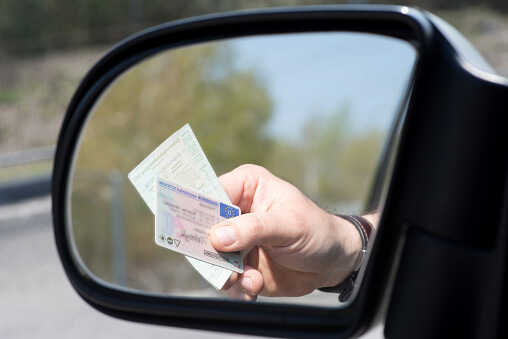
Driver’s License If you have a foreign driving licence, in most cases you will have to retake the driving test in order to obtain a Dutch licence. However, if you benefit from the 30% ruling, you can switch your foreign driving licence without retaking the test.
International school fees. Subject to conditions international school fees for children may be reimbursed tax-free by an employer in addition to the 30% allowance. Considering the significant contributions involved, this can result in a substantial saving. Where employers do not reimburse the school fees, employer and employee can agree to a salary sacrifice scheme that is often beneficial to both.
Reimbursement for costs incurred abroad: Costs incurred outside of the Netherlands due to the transition process of the international employee may be reimbursed. A few examples of these costs include: i. Relocation expenses at the beginning and end of the assignment period ii.Cost of living components included among other meals, gas, water and electricity. iii. Expenses for medical examination and vaccinations for the stay in the Netherlands. iv. Application for official personal documents, such as residence permit, visas and driving licenses. v. Extra expenses for tax advice. vi. Professional education expenses in connection with employment (such as Dutch language classes)
Top 9 Benefits of 30% Ruling in the Netherlands
30% Ruling for employees
The 30% ruling can also be beneficial for employers. Below is a summary of the main benefits:
Attracts more employees, even from abroad!! With the same salary costs, employers are able to offer employees from abroad a more attractive net salary.
Reduction of salary costs. Or employers can reduce their own salary costs, for instance in case of net salary arrangements or agreeing on a lower gross salary (since the net salary is still higher than local employees). We refer to our calculation tool (available soon, you can call us for a calculation in the meanwhile) that compares the net salary with and without the 30% ruling.
Reduction of social security costs. The reduction of salary will decrease the basis for social security contributions. When the salary is below € 55,927 (2019) the Dutch social security savings can be as much as approximately 20% of the difference between the reduced salary and the threshold of € 55,927 above which no contributions are due.
Reduction of company pension costs. Similar as for social security, savings may be obtained for (Dutch) company pension contributions, as due to the salary reduction the pensionable salary. The build-up of pension rights will be lower and, as such, the employee and employer contribution would also be lower. Next to these consequences, a lower pensionable salary also influences the build-up of widow and orphan pension rights.
In this respect, note that from a tax point of view there are no limitations, but it depends on the Dutch pension scheme whether it is allowed to build up pension on part of the salary that is received as a tax free reimbursement. This must be fine-tuned with the pension insurer.
Example of the 30% ruling:
An employee who is 35 years old receives a salary of €1000,000. This employee does meet the minimum salary requirement to receive the full 30% ruling. After taking into account the 30% ruling his taxable salary will be €700,000. In addition, he receives a tax free allowance of €300,000.
An employee who is 35 years old receives a salary of €50,000. If the 30% ruling would be taken into account in full, his taxable salary would be €35,000. This is lower than the mandatory salary and therefore not allowed. In this case, he would only benefit from the 30% ruling partially, for a maximum amount of (€50,000 -/- €36,889) €13,111.