Home Blog Page 23

Deadly Covid-19 Omicron Variant in the Netherlands: A Major Health Concern

0
Deadly Omicron Variant in the Netherlands

Deadly Covid-19 Omicron Variant in the Netherlands has posed great threat among the citizens of the Netherlands. The Netherlands was affected by the Omicron Variant of Covid way before the first Covid case due to this variant emerged in South Africa. Let’s check out what Omicron Variant is and how it was discovered in the Netherlands.

What is Omicron variant of Covid-19?

The World Health Organization designated the B.1.1.529 variant a “variant of concern” on 26th November 2021 and named it Omicron. WHO says there’s no evidence to suggest that symptoms linked to omicron are different from those caused by other variants.

Dr. Angelique Coetzee, a private practitioner and chair of South African Medical Association, was one of the first doctors in South Africa to detect the new variant. She told Reuters symptoms of the omicron variant were “very mild” and could be treated at home.

These infections were first reported in university students who were younger and tended to have milder disease. But, WHO said, omicron may be capable of causing severe disease or death, particularly among vulnerable populations.

Symptoms of COVID-19 caused by any known coronavirus variantcan include fever or chills, cough, shortness of breath, fatigue, muscle or body aches, headache, sore throat, a loss of taste or smell, sore and congestion or runny nose.

It will take weeks to understand the new COVID-19 variant, experts say.

The new variant poses a “very high” global risk, the World Health Organization said in a technical brief on how to prepare for Deadly Covid-19 Omicron Variant in the Netherlands. The WHO said the variant had a high number of mutations, some of them concerning and pointing to “immune escape potential and higher transmissibility.” That means it is uncertain if the current COVID-19 vaccines will work against it and that the variant has the potential to spread faster.

Experts in South Africa said the variant was likely behind a “rapid rise in cases” in the last two weeks in the country but that it was too early to tell if the variant was more severe. WHO urged countries to “ensure mitigation plans are in place to maintain essential health services” in case of a potential hospitalisation surge.
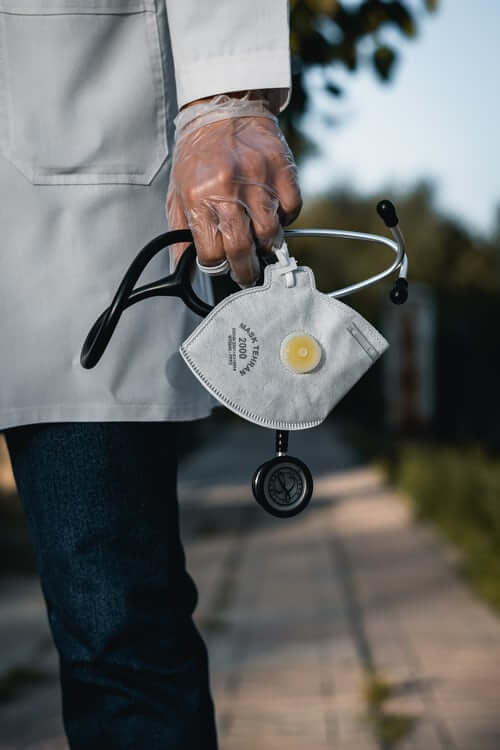
Deadly Covid-19 Omicron Variant in the Netherlands
Omicron Variant in the Netherlands

When and How it Emerged in the Netherlands?

The new Covid-19 variant, Omicron, was present in the Netherlands earlier than previously thought, officials say. It was identified in two test samples taken in the country between 19 and 23 November, which is before the variant was first reported by South Africa.

It is not clear whether those who took the tests had visited southern Africa.

It was previously thought that two flights that arrived from South Africa on Sunday had brought the first cases of the variant to the Netherlands.

The Dutch public health authority confirmed that Fourteen people on the flights to the capital, Amsterdam’s Schiphol airport before a flight ban was put in place, tested positive for Omicron, among 61 passengers who were found to have coronavirus and were immediately put into isolation at a hotel near the airport, while a small number were allowed to sit out their quarantine at home under strict conditions.

Health authorities appealed to all travellers who returned from southern Africa in the past week to get tested and set up a test centre at Schiphol Airport for Dutch citizens returning from the region. The tests are voluntary, and travellers can wait for the results in isolation at home.

However, while the two new samples reveal Omicron was in the Netherlands earlier than thought, they do not predate the cases in southern Africa. The variant was first found in a specimen collected on 9 November, according to the World Health Organization (WHO).

Early evidence suggests Omicron has a higher re-infection risk. But scientists say it will take about three weeks before it is known how the heavily mutated variant impacts on the effectiveness of vaccines.

“In a special PCR test, the samples showed an abnormality in the spike protein,” the National Institute for Public Health (RIVM) which announced the earlier cases said. “This raised the concern that the Omicron variant… might be involved. Health officials will notify the people involved and start source and contact tracing,” it said. The RIVM also said that a number of different strains of Omicron were found among the passengers on board the two flights.

“This means that the people were very probably infected independently from each other, from different sources and in different locations,” a spokesman said.

Dutch authorities, meanwhile, are also seeking to contact and test thousands of passengers who have travelled from South Africa, Botswana, Eswatini, Lesotho, Mozambique, Namibia and Zimbabwe. All other steps are being taken by the Dutch Ministry to prevent the spread of the new variant.

How Deadly Covid-19 Omicron Variant in the Netherlands has Become a Major Health Concern?

As per the latest updates on 17th December, Health minister Hugo de Jonge said,

If it is necessary to brake the virus spread or delay it… then we will take those decisions, he said. What we do know is that people who’ve had one or two jabs are not sufficiently protected against the new variant.

And we can extract from the given statement that the Deadly Covid-19 Omicron Variant in the Netherlands is a major health concern. In addition to the above information, what is raising the concern more is that a quarter of coronavirus cases in Amsterdam are now known to be Omicron!!!

The minister admitted that it is extremely busy at the regional health boards but he also said vaccination capacity is being scaled up rapidly.

If you can’t make an appointment, there will be new slots tomorrow and again the next day, he said. The government hopes that everyone will have had a booster vaccination by mid January so that people have stronger immunity to fight against this Deadly Covid-19 Omicron Variant in the Netherlands.

Get to know about various health care gadgets that can help the people of Netherlands in the fight against Coronavirus by reading, Digital Healthcare Netherlands: How Covid-19 Pandemic boosted the Healthcare game

How to Plan for Kids Education in Netherlands? Explained with 5 Easy Steps

0

People have many goals and a child’s education is among most important goals. Here are 5 Best Steps to Plan for Kids Education in Netherlands.

Many parents make financial mistakes due to insufficient knowledge & fail to properly plan for this critical financial goal.

Step 1: Decide time horizon & cost of education

Before starting any journey, you find the destination, isn’t it? Similarly, before planning a financial goal, you need to decide on two crucial points – when the money will be required & what is the estimated cost (in today’s terms).

Regarding the time, you need to keep in mind that the money requirement will start to arise as your kid moves past 9th standard.

This will help pay for specialized coaching that she may require from the perspective of clearing competitive exams. Also, the money requirement will span across years & will not arise in a single year.

The best approach regarding cost estimation is to consult parents whose kids are actually pursuing higher education. They are in the best position to give you a holistic perspective. Average Education inflation ranges between 12-15%.

Hence, you need to consider that to arrive at the future cost (as on the year you need the money) of this financial goal. You can arrive at this amount using the +FV function in MS excel.

Plan for Kids Education

Step 2: Tag your existing assets to this goal & arrive at the monthly saving amount

Now, the next step is to tag your existing investments to this goal. You can do it simply in an excel sheet. For example, it can be your investment in the PPF account in the child’s name or a particular mutual fund scheme. Take care to ensure that the investment will not be in lock-in when you need the money.

Once you’ve done the tagging, you can arrive at the shortfall. This is the total money you need to plan & invest for. But how to find how much I need to invest per month in bridging this gap over so many years? To find that, you can simply use the +PMT function in MS excel.

Step 3: Decide on the suitable Investments

Now that you’re clear on the monthly investment amount, you need to choose a good investment product. This is where most people make the mistake of selecting opaque, untransparent & high-cost products.

In our view, you can stick to low-cost & straightforward products like mutual funds & PPF. You also need to have an asset allocation that means a balanced allocation between equity & fixed-income investments.

You can consider equity mutual funds & for fixed income portion for equity portion. You can choose debt mutual funds (or fixed deposit, if you fall in lower tax brackets) & PPF. Finalize 2-3 schemes from each category having a decent performance track record.

Important: Do not fall for child insurance plans – they are a clever marketing gimmick to profit from the parents’ emotions & anxiety for their child’s education.

Step 4: Start Investing

Once you’ve finalized the schemes, the next & the most crucial step is to START INVESTING EVERY MONTH. When you invest a fixed amount regularly, you save yourself from the need to time the market & can ignore the volatility. The easiest way to do this is to start a investing in the mutual fund schemes.

This will help in two ways as follows:

  • You put your investments on “autopilot”. This removes the mind’s resistance to investing manually.
  • You become clear on how much money is left after investing. This will help you manage your spending in a better way.

Step #5: Do a “performance review”:

Like you have a once-in-a-year “performance review” in your workplace. Similarly, you need to sit with your investments & do a performance review on this goal’s progress. In the review, you need to do the following:

  • Check the asset allocation & see if it has deviated from your ideal allocation. If yes, re-balance by buying/selling investments, as applicable.
  • Check the performance of the schemes you’ve invested in. If there are any sharp drops in performance or events like a change in fund manager, evaluate whether you should continue in the scheme or not.
  • If you’ve got a pay raise during the year, check if you can increase the investment amount.
  • As you reach closer to the goal, start moving all your money to a fixed income. Try that 3 years before the goal due date; your entire investment is in fixed income.

Some additional tips to help you plan for your child’s education:

  • Don’t forget to get adequately insured by purchasing life, personal accident & Mediclaim insurance.
  • Have a contingency fund of at least 6 months. This will help you stay on course despite any financial emergencies.
  • The above calculations require some dedicated time & working knowledge of MS Excel. If this proves too overwhelming, don’t hesitate to consult a financial planner.
  • Though a child’s education is a critical goal, do not sacrifice your retirement for this goal. As a last resort, a child’s education can be funded with a retirement loan, not your retirement!

A child’s education is a crucial goal. Careful planning by way of precise estimation of the money requirement & selection of suitable investments helps in getting the right start. Periodic tracking helps in making mid-journey course correction so that you can safely meet the financial goal & secure your child’s future. Happy investing Netherlands 🙂

To get more knowledge on investing and to avoid investment mistakes, Checkout Top 5 Points That Every Young Investor Should Be Mindful of While Investing.

Top 5 points That Every Young Investor Should Be Mindful of While Taking Investing Decisions

0

As a young investor, there are 5 Points To Consider Before You Make Investing Decisions. While you are young, you are sure of your capability to earn good money & investing it in the right avenues.

However, you must be mindful that most of your decisions come from your feelings & emotions as human beings. Certain behavioral biases can lead you to make wrong decisions which can negatively affect your financial health. The more you are mindful of these biases, the more logical & rational financial decisions you can make.

Herd Mentality

If you plan to watch a movie or eat out on the weekend, you check with your family & friends for recommendations & go ahead with it, isn’t it? Well, that is herd mentality for you, simple.

Being part of the herd makes the mind feel safe.

You don’t know whether the path is right or wrong for you and your financial health. But you derive a sense of satisfaction from being part of the crowd rather than being seen as someone who walks a lonely path.

This behaviour is acceptable only till it is limited to things casual like movies and restaurants. But not when it comes to managing your money. You may end up making money decisions that don’t serve your financial needs & goals.

To avoid herd mentality bias:

  • Spend time learning about personal finance.
  • Do your own financial research.
  • Arrive at an informed opinion basis your unique financial situation.
Top 5 Points That Every Young Investor Should Be Mindful of While Investing decisions
Don’t be a Sheep!

Loss aversion

Scientific research has proven the fact that the pain of loss is twice the joy of gain. And this is why people commit the following costly financial mistakes:

  • Selling investments when markets start to fall.
  • Holding on to poor investments.
  • Forego wealth-creating asset class like equity for fear of loss.

To avoid loss aversion bias:

  • Know that high returns accompany higher risk. For your long-term goals, be prepared to invest in equity. For risk, manage it through a proper asset allocation process.
  • When markets tank, consider this as a SALE. You get to pick up quality stocks for fewer prices. This goes to reduce your overall cost of investment.
  • Do not get attached to your investments. Set a loss limit on your investments. Follow it ruthlessly.

Recency

Recency bias means that an investor gets highly influenced by the information/events in the recent past. And he/she uses this information to make investment decisions.

For example, during rising equity markets, investors try to join the party on reading about the returns that people around them are earning. The sad part is that it’s done at the cost of their financial goals, risk tolerance, and asset allocation. Result: As and when markets fall, these investors suffer the maximum loss.

To avoid recency bias:

  • Limit your intake of market news – Do not track markets daily.
  • Always follow a “process” when it comes to your finances.
  • When it comes to making a new investment, evaluate from all angles – risk, return, taxability etc.
  • Stay away from hot stock tips or “flavour of the season” mutual funds.
  • Invest systematically in equity schemes (through SIP) with a proven long term track record, & regardless of the market levels.

Confirmation

When you invest your hard-earned money, your decision should be backed up with hard facts. However, studies have proved that investors generally rely on emotion to decide on the investment. And then, they apply logic to justify the decision.

For example, you’ve made up your mind to invest in a so-&-so stock. Before investing, you look at its Price to Earnings ratio (PE ratio) & find it very high. Plus, you find that it has a lot of debt on its balance sheet. You know that the debt can impact its long-term earnings.

To justify your decision, you compare its PE with other companies in the sector. You find its PE to be within the range. And hence you go ahead with your decision. So, here your confirmation bias led you to ignore the fundamentals & selecting a poor-quality stock.

To avoid confirmation bias:

  • Carry out research on the investment through multiple sources before making any investment
  • Be open to critical feedback
  • Hire a financial planner to give you an unbiased second opinion on your finances.

Self-Attribution

This bias means that as an investor, you take credit for sound financial decisions to your financial acumen. Whereas in case of any loss, you blame the markets, economy, and everything.

Suppose you invest in equity mutual funds. By coincidence, around the same time, the markets start to rise. You see yourself earning an excellent double-digit return. While you go about bragging about your achievement, remember that markets are volatile in the short term & the tide can turn anytime.

To avoid this bias:

  • Dive deep into learning the fundamentals of personal finance such as asset allocation, rupee-cost averaging, compounding, etc.
  • Set ground rules & process & let that process guide your financial journey
  • Take yourself out of the equation. Stick to the process.

Investing is a long and slow journey. Think of it like a marathon, not a 100m dash. Be prepared for the ups & downs, which will test your resolve and temperament. In the end, only one who keeps a steady head in tough times & avoids the various behavioral biases that will win the race of investment.

To know all about investments in the Netherlands, Checkout “Make your money work for you”: Why to Invest In Netherlands? Top 8 irresistible investment options in Netherlands

10 Astonishing World Heritage Sites in the Netherlands

0

The Netherlands always impresses all with its charm and is being noticed by the whole world. Even the UNESCO can’t miss out on mentioning these 10 Astonishing World Heritage Sites in the Netherlands. Let’s hope on this ride of learning about these beautiful monuments in the Netherlands.

1. The New Dutch Waterline

The Dutch Water Defence Lines represents a defence system extending over  200 km along the edge of the administrative and economic heartland of Holland. It is comprised of the New Dutch Waterline and the Defence Line of Amsterdam. Built between 1815 and 1940, the system consists of a network of forts, dikes, sluices, pumping stations, canals and inundation polders, working in concert to protect the Netherlands by applying the principle of temporary flooding of the land if enemy troops are approaching.

2. Colonies of Benevolence

The Netherlands has recently gained some new World Heritage Sites which are the transnational Colonies of Benevolence. There are three settlements in the Netherlands: Frederiksoord, Wilhelminaoord, and Veenhuizen in Drenthe, and Wortel in Belgium — just south of the Dutch border. 

The colonies were set up in 1818 as a project to combat poverty among the population. Poverty-stricken families, beggars, and homeless people from the cities could go and work in the Colonies. They were given their own homes and a section of land so that they could learn to support themselves, and their children were sent to school.

3. The Beemster Polder

The Beemster Polder, dating from the early 17th century, is is an exceptional example of reclaimed land in the Netherlands. It has preserved intact its well-ordered landscape of fields, roads, canals, dykes and settlements, laid out in accordance with classical and Renaissance planning principles. Now, thanks to ingenious and intricate planning, it’s an agricultural landscape made up of fields, roads, canals, dikes, and settlements. Middenbeemster, a little town in the countryside with horses, moats, a drawbridge, and a central market square, is sure to be a lovely outing in the summer.

4. Frontiers of the Roman Empire – The Lower German Limes

Following the left bank of the Lower Rhine River for approximately 400 km from the Rhenish Massif in Germany to the North Sea coast in the Netherlands, the transnational property consist of 102 components from one section of the frontiers of the Roman Empire. The property comprises military and civilian sites and infrastructure that marked the edge of Lower Germany from the 1st to 5th centuries CE.

Archaeological remains in the property include military bases, forts, fortlets, towers, temporary camps, roads, harbours, a fleet base, a canal, and an aqueduct, as well as civilian settlements, towns, cemeteries, sanctuaries, an amphitheatre, and a palace. Almost all of these archaeological remains are buried underground. Waterlogged deposits in the property have enabled a high degree of preservation of both structural and organic materials from the Roman periods of occupation and use. 

10 Astonishing World Heritage Sites in the Netherlands

5. Willemstad, Inner City and Harbour, Curaçao

Willemstad is a town on the Caribbean Island of Curaçao. (Yes, you read that right: if you didn’t already know, some municipalities of the Netherlands are located in the Caribbean Sea!) Willemstad, a cute and colourful port town is where the Dutch established a trading settlement. The site has become a symbol of a growing multicultural community within the Netherlands and has been marked as a world heritage site since 1997.

6. The D.F. Wouda Steam Pumping Station

Another celebration of technology! Damn, they weren’t kidding when they said the Netherlands was the land of water. This World Heritage Site is a steam-powered pumping station, meaning it pumps excess water out of Friesland. It is the largest station of its kind that’s still in use, which is pretty impressive considering it opened in 1920 and marked as a world heritage site since 1998. It now runs on heavy fuel oil and has the capacity to pump up to 4,000 cubic meters of water per minute!

The Woudagemaal is located in a busy seaside town called Lemmer. There’s a visitor entrance that provides you with all the history of the site, an interactive museum experience which the kids will love, and regular tours.

7. Mill Network at Kinderdijk-Elshout

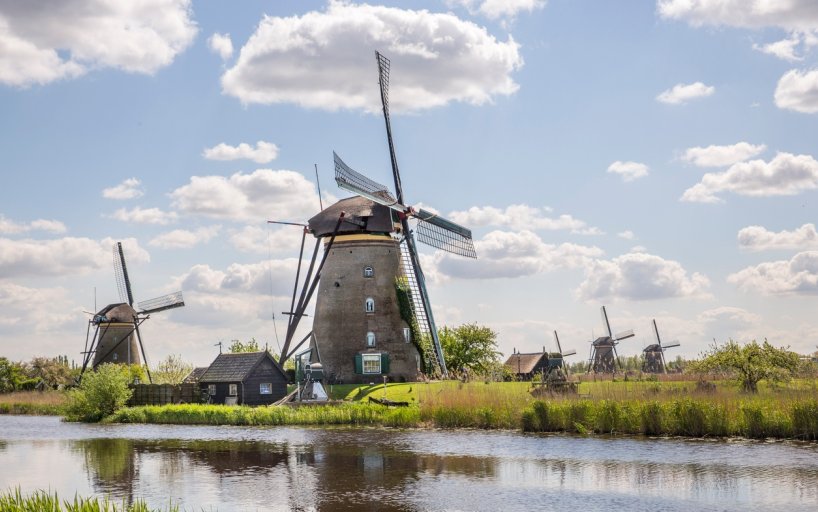
In South Holland, the Windmills of Kinderdijk-Elshout is a charming Dutch mill network and famous man-made landscape built between 1738 and 1740. The area is constructed in a similar way to the Defence Line of Amsterdam, with polders, embankments and dikes. It has 19 drainage mills, three pumping stations, two discharge sluices and two Water Board Assembly Houses which work for the drainage of the land. The windmills essentially keep water out of the polder.

8. Rietveld Schröder House

Rietveld Schröderhuis, located in Utretch, is an outstanding piece of architecture designed in 1924 by Gerrit Reitveld. It was built at the request of Truus Schröder-Schräder, whose husband had recently died. Schröder played an important role in the design process because she knew she wanted it to be simple, spacious, and free. She actually asked for it to be designed without walls, so it didn’t constrain her or hide the truth of her emotional life with her three children. She wanted fluidity and a connection between the inside and outside to mirror their new commitment to openness.

Mrs. Schröder lived in the house until her death in 1985. The house was restored by Bertus Mulder and is now a museum where you can find out more about her life and the Dutch artistic movement De Stijl, of which the Rietveld Schröder House is an embodiment.

9. Schokland and Surroundings

As an archaeological monument and former island, Schokland and its surroundings possess a mysterious past. This World Heritage Site (gosh that really is a mouthful) lies within the centre of Noordoostpolder and is steeped in cultural history. It’s home to a sweet old church, a lighthouse keeper’s house, and the Schokland Museum. According to Statistics Netherlands, there are just five people living there!

10. Seventeenth-Century Canal Ring Area of Amsterdam inside the Singelgracht

This refers to the historical Canal Ring built in the 17th century. The four main canals are Herengracht, Prinsengracht, Keizersgracht, and the Singel. The surrounding areas form the Amsterdam Canal District (Grachtengordel). These canal belts eventually lead into the Amstel river. Why not experience this historic, cultural, and romantic part of the city by booking a boat? From fancy culinary cruises to wading the waters DIY style with a paddleboard, there are plenty of ways to enjoy this World Heritage Site.

netherlands

Hope now you have ample information about the places you would be visiting on your trip to the Netherlands. Happy Netherlanding!!

Visiting places all day calls for some rest and food :). Checkout 10 Best Restaurants in Netherlands where you would love to hangout

Top 5 Benefits of Mobile App Analytics for Successful Business

0

It’s an old norm that the growth of your app directly depends on the value you create for your customers. There are these top 5 Benefits of Mobile App Analytics that will help your business grow and reach success.

To put data behind your customer motivation hypotheses, you need to integrate app analytics into your marketing plan. App analytics allow you to create an acquisition strategy which gives more return on your investment, and allows you to build for your customers in a way that benefits them most and to do that you must know What is mobile analytics?

What is mobile analytics?

Mobile analytics captures data from mobile app, website, and web app visitors to identify unique users, track their journeys, record their behavior, and report on the app’s performance. Similar to traditional web analytics, mobile analytics are used to improve conversions, and are the key to crafting world-class mobile experiences.

Why are mobile analytics important?

Mobile usage surpassed that of desktop in 2015 and smartphones are fast becoming consumers’ preferred portal to the internet. Consumers spend 70 percent of their media consumption and screen time on mobile devices, and most of that time in mobile apps. This is a tremendous opportunity for companies to reach their consumers. Companies use mobile analytics platforms to gain a competitive edge in building mobile experiences that stand out. Mobile analytics tools also give teams a much-needed edge in advertising.

Top 5 Benefits of Mobile App Analytics

Mobile analytics typically track:

  • Page views
  • Visits
  • Visitors
  • Source data
  • Strings of actions
  • Location
  • Device information
  • Login / logout
  • Custom event data

Here are Top 5 Benefits of Mobile App Analytics for Successful Business

1. App analytics help drive Return on Investment over every aspect of performance

Millions of apps on the app stores are contesting for visibility and customer attention. In this cut-throat contest, you cannot afford to have an acquisition strategy lacking monetary goals. Marketing costs money, and naturally, you need to measure how different channels deliver and compare throughout various acquisition strategies to understand what results in the best ROI.

A winning analytics strategy requires two additional points:

a. Observing which channels provide the highest customer lifetime value (LTV). Customer LTV of users commonly calculated by users generating higher revenue and higher retention possibility.

b. A focus on in-app messaging. Hearing from customers who have the power to connect with your team at the right time throughout your app experience are imperative to improving your strategy.

It is needless to say that without integrating app analytics into your marketing channels, you won’t be able to dive deep into any of the above learnings from your customers.

2. App analytics help you to gather accurate data to better serve your customers

It’s difficult to listen to your customers without looking deeply at their use patterns and feedback. App analytics allow you to gain insight into customer data to better serve them across all lifecycle stages.

Naturally, app marketing strategies focused on delivering long-term results cannot solely focus on acquiring users; they also have to focus on customer retention by ensuring a constantly upgraded and improved-upon user experience. A large portion of app downloads and purchases are only used once, with customers quickly leaving and never coming back to open the app again. So, receiving customer-specific feedback and addressing the right issues can be crucial to increasing engagement.

3. App analytics allow you to drive personalized, customer-focused marketing

Creating an individually targeted customer experience is now completely possible through the use of app analytics. Customer-targeted push messages delivered to specific people can make your app open rates double in a short amount of time, and can convert up to three times better than generic push messages. App analytics working in unison with your marketing campaigns can even help you win back churned customers with targeted messages and experiences.

App analytics also provide deep insight into new customers who could easily be converted into higher lifecycle stages, but who have somehow fallen out of the funnel. You’ll learn about customers who don’t return to your app after a single use, and the data you gain can help figure out targeted strategies into how to win them back by making them priority targets. By analysing in-app customer behaviour and profile data, you’ll find that offering a customer-centric approach will garner far better results than all-for-one messaging.

4. App analytics let you track individual and group achievements of marketing goals from campaigns

Many app marketers rely on channels they’ve had experience with in order to drive results, but integrating app analytics gives you a whole new set of customer data to learn from. Now app marketers can gain insight around individuals and small groups of customers completing specific, directed tasks within the app, and the possibility to capitalize on this knowledge is endless.

Today’s app environment is changing rapidly and apps are sneaking into every corner of our daily life. To help your app stand out, it’s time to move away from the mindset of preferred acquisition channels being the right ones for you before their performance is verified. App analytics can help you decide whether or not you’re spending your money in the right places, right down to the individual customer level.

Make sure your spend is on the right investment.

Detailed, specific customer data opens up the possibility for many new types of app marketing channels to work for your app, so it’s important to keep an open mind as you gather new data points. As you make your presence on all types of acquisition and marketing channels better known, your app analytics will keep gathering data points on performance to help you focus on the channels that work best for your app.

5. App analytics offer data-driven insights into issues concerning churn and retention

Apps with higher retention rates enjoy better engagement, and more retention and engagement helps the app to gain more customers and achieve growth.

The most successful apps use app analytics to focus not only on high LTV customers and acquisition channels, but also on closing the gap between churn and retention. App analytics play a key role in this process by providing you with predictions around possible churn based on real customer data. Knowing when, where, and why customers are more likely to dump the app helps you meet the problem head-on and offer new ways to win them over or win them back.

App analytics work in the background to enhance and optimize your app marketing efforts, allowing you to achieve better growth, happier customers, and higher ROI. The above benefits paint a picture around why app analytics are crucial to success in today’s marketing world.

To Grow your business through different strategies, Checkout Top 7 Content Marketing Strategies to take your business to newer heights

10 Best Must Visit Car Service Chains in Europe

0
10-Best-Must-Visit-Car-Service-Chains-in-Europe-in-netherlands

10 Best must visit car service chains in Europe that will definitely help the car holders who always suffer in finding them a satisfying lot of car services and they always worry about finding these services at their best interests.

JUST LEASE

Contact: 030 850 1500

Just Lease offers private car leasing in the Netherlands. Choose a brand-new vehicle with a longer term (48-60 months) or a used car with a shorter lease (24-36 months). Their services include:

  • Scheduled maintenance
  • Damage repairs
  • Tire replacement
  • Road tax and all-risk insurance are covered by lease agreement.

ANWB

Contact: 088 269 2020

ANWB is the Dutch automobile association and offers a range of products and services. That includes:

  • Car Lease with standard and short-term car leasing. The monthly fee covers roadside assistance in the Netherlands and throughout Europe, scheduled maintenance, tire replacement, vehicle and passenger insurance, Dutch road tax and more.
  • Car Rental in collaboration with Hertz Benelux.
  • Credit Card offers an exclusive, internationally-accepted charge card in cooperation with ICS Netherlands.
10-Best-Must-Visit-Car-Service-Chains-in-Europe-in-netherlands

BYNCO

Contact: 030 207 4220

If you are an expat and right now setteling down in the Netherlands then BYNCO is the perfect place for you. Bynco (Buy Your Next Car Online) is a Dutch secondhand car dealer that operates completely online. It is a division of the AutoBinck Group, one of the oldest automotive companies in the Netherlands. Bynco offers a large inventory and every vehicle has been independently inspected. Buy a car, have it delivered to your home, drive it for 14 days and if not satisfied, return it for full refund.

KWIKFIT

Contact: 088 594 5348

KwikFit is one of the largest car service centre chains in the Netherlands with 175 locations including 10 in Amsterdam, 5 in The Hague, 5 in Utrecht and 4 in Rotterdam. APK roadworthy vehicle test, oil change, A/C charge, wheel balance, new tires and engine repairs.

SIXT

Contact: 023 569 8656

Sixt is one of the largest car rental agencies in Europe. They have locations in over 20 cities in Netherlands (including Amsterdam, Apeldoorn, Eindhoven, Groningen, The Hague, Maastricht, Rotterdam and Utrecht) plus all 5 Dutch airports. Min age to rent is 21 years (25 years for luxury cars). Rental car can be returned to a different location in Holland (no charge) or another country (fee charged).

Sixt also offers moving van and truck rentals starting at a minimum of 4 hours.

WITTEBRUG LEASE

Contact: 070 342 9400

Wittebrug Lease is a division of the Wittebrug Automotive Group, a Dutch company with Volkswagen, Audi and Seat dealerships in The Hague, Delft, Leiden and surroundings. Lease a car from 1 to 24 months under their short-lease program. Or opt for a full-term 4 or 5 year private lease.

AUTOBANDENMARKT

Contact: 020 890 3697        

This Dutch online car tire shop offers the widest selection of summer, winter and all-weather tires for personal automobiles, vans, trucks, race cars and vintage models. They also sell wheels and rims plus tires for specialty vehicles such as golf carts, trailers, caravans and motorized lawn mowers.

AUTO.nl

Contact: 020 280 2800        

Auto.nl is a Dutch online car dealership for buying or leasing a vehicle. On average, their used car prices are 3% lower than standard outlets while new vehicles are priced 9% lower. Private lease terms from 1-5 years. Auto.nl is owned by the Louwmann Group, one of the biggest names in the Netherlands’ auto industry.

BUDGET

Contact: 088 284 7500        

Budget is an American rental car company with locations across the Netherlands, including in Amsterdam, Breda, Groningen, Rotterdam, The Hague and Utrecht as well as at all 5 Dutch airports. They offer vehicles from economy size up to passenger vans.

CENTRAAL BEHEER

Contact: 055 579 8000        

Centraal Beheer offers car insurance, motorcycle insurance, moped insurance and caravan insurance. It is headquartered in Apeldoorn and is a division of Achmea, the Netherlands’ largest insurance company.

Found it useful? Save it for later!!

To know more about ways to get your utilities sorted, Checkout How to get your utilities sorted in the Netherlands: Gas, electricity, water and more

Dental Care Netherlands: Dental Cost & Dental Insurance

0
Dental Care Netherlands

+Dental Care is an appealing, modern, and experienced dental practice operates at more than 20 locations in the Netherlands. dental care Netherlands

Netherlands has one of the best health care system in the world and same goes with the dentist care. In the Netherlands all the dental care are registered with the government. If you just moved to the Netherlands it could be possible that you are confused with the Dutch health system which is quite normal for an expat.

Dental Care Netherlands

Is dental care covered in Netherlands?

As you may already be aware, standard basic insurance in the Netherlands does not cover dental costs. Because dental care in the Netherlands is privately owned, the so-called ‘basispakket’ does not cover your bill at the Dutch dentist. However, you are not entirely on your own. If you are under 18 your dental cost is covered with the basic health insurance. On the other hand if you are +18 the dental insurance cost depends on you insurance provider.

How much does dental care cost Netherlands?

Dental cost in Netherlands depends on the type of treatment you are willing to take. Following is the estimation of the dental cost in Netherlands:

  1. Dental Check-up cost is around 20-30 euros.
  2. Dental Cleaning cost is around 110-130 euros/hour.
  3. Root canals can cost up-to 500 euros

Check Dental cost

  1. Dental Care Amsterdam
  2. Dentalzorg
  3. PhP

Is dental care free in Holland?

The answer is no, Dentistry is privatize in the Netherlands which means you have to pay dental care cost in the Netherlands. Although, your dental insurance can cover up to 75% of your dental care cost. For more clarification on the reimbursement you have to contact your insurance provider.

Disclaimer: This blog is provided for informational purposes only; neither the author nor digitify.nl recommend or support any specific healthcare provider in any case. Readers are solely responsible for their own decisions.

dental implants

Gas, Electricity and Internet: Compare and Sort Your Utilities in the Netherlands

0

Utilities in the Netherlands: Getting gas, electricity and internet connection

Mostly, gas and electricity are already connected to your property, you only need to choose a provider and transfer the services into your name.

The Netherlands is home to some of the fastest and most expensive internet in Europe, and the fifth-fastest in the world! However, your home internet speeds will depend on your provider, connection type, and the infrastructure near your house.

In the Netherlands, service providers have started offering home internet i.e., packages. These often include other utilities such as your phone and TV.

Usually, once you have chosen a service provider, they will either send you an installation team to get your internet up and running, or they will provide you with the tools to do it yourself.

Below you can compare and get your Gas, Electricity and Internet plans from different companies!

Top 3 Online Survey Tools | Get Rewarded Now!

0
online survey tools

Are Online Survey Tools Free

If you are looking to make easy money, online survey tools are what exactly you need right now. It’s an excellent way to get rewarded and earn just by answering the questions.

How you get paid?

You’ll earn virtual points every time you complete a survey! Those are referred to as Loyalty points (LPs). They can be exchanged for popular e-gift cards, PayPal credit, and other items. The more surveys you finish, the more rewards you’ll receive. Below are most popular online survey platforms throughout the world.

8 Best Ways To live Eco-friendly and Budget-friendly life in Netherlands

0

With the deteriorating condition of our planet, it is the need of the hour to take greater steps in favour of our earth. By following 8 Best ways for living eco-friendly and budget-friendly life in Netherlands.

We have been exploiting the resources on earth as they were something eternal but we need to understand that earth is getting short of resources and the existing ones are needed to be conserved for future. So, being far-sighted, lets discuss some ways to lead a sustainable life in the Netherlands. (Charity begins at home, right?)

Replace plastic bottles with insulated bottles

Instead of using plastic bottles, you should invest in a reusable bottle. Having your own water bottles proves to be very convenient Especially with the clean tap water in the Netherlands, you can refill it anywhere, anytime. In addition to this, having a water bottle handy will always keep you hydrated. Isn’t that awesome!!

Buy from thrift stores

Common brands have some pretty trendy and affordable items. However, despite these low prices, these have a high environmental cost. Instead of buying from these stores, you can thrift your clothes instead! Thrifting your clothes is environment-friendly and saves clothes from going into a landfill. Many cities in the Netherlands have vintage or second-hand clothing stores that you can check out. Also, there are several apps for buying (and selling) clothes second-hand. All you have to do is make the purchase and the seller will have it posted to your nearest pick-up point or directly to your door.

life in Netherlands
Stores in Netherlands

Go to grocers for fruits and vegetables

Shopping at the grocery store can produce plastic and packaging waste. So, to avoid that, the better idea is to shop at the local grocers.  You can find them in your city center at the open-air markets, which often take place two days a week. You can also buy cheese, meats, bread, and a lot more there! Buying foods from your local grocers cheaper than buying from the supermarket, as well as it also produces less waste because less packaging is used. 

Refill essential items

Most of your toiletry and household items can be refilled at bulk stores without producing any waste. There are several zero-waste stores in the Netherlands where you can get this done. Also, many zero-waste stores also make deliveries to your home. One interesting thing to know is you give a small deposit when you order and then get it back on your next delivery when you return the container.  

A tote bag is a must

Tote bags are better for the planet than plastic bags. Plus, paying extra for plastic bags just isn’t the Dutch way.  Along with that, these bags come in thousands of different designs that you can’t stop yourselves from buying them. All you need to do is to keep distance from plastic bags.

City’s recycling service

Most Dutch cities have bins for you to recycle glass, bottles, and paper. While it may feel wrong, plastic can actually be thrown in the regular rubbish in the Netherlands as it is automatically sorted later. However, according to studies, only around 40% of Dutch household and industrial waste is actually recycled. So, if you really want to do good by the environment, ditch the plastic.

8 Best ways for living eco-friendly
Recycling service

Go paperless

Going paperless can conserve a lot of paper waste. You can’t even imagine how many trees you save by not using paper. Some of the ways to reduce paper usage can be getting digital versions of books or switching to digital banking rather than following the traditional banking methods or taking digital notes and many more. You can save paper in your own way.

Make your own compost

Plant lovers know the importance of compost. You can easily reduce your food waste by making your own compost at home! Composting is when you put food waste and other kinds of waste together to make organic material that helps plants grow.

Making your own compost can reduce methane production and keep waste out of landfills. Plus, it is really healthy for your plants. 

These were some ways which can be followed easily by anyone. Do your bit for your plant!!

Netherlands has come up with many innovative ideas to live sustainable life. To know about these innovations checkout Netherlands Perfect Place for You to Visit “Country of Innovations in The 21st Century”.