Home Blog Page 18

Five Benefits Of Prepaid Debit Cards | Top 5 Astonishing Pros And Cons Of Prepaid Debit Card That May Change Your Perspective

0

When it’s concerned with where to keep money, the first thought that comes to mind is about credit or debits cards. However, there are another kinds of cards also like prepaid cards. Let’s grab some knowledge on prepaid cards and get to know Top 5 Astonishing Pros and Cons of Prepaid Cards.

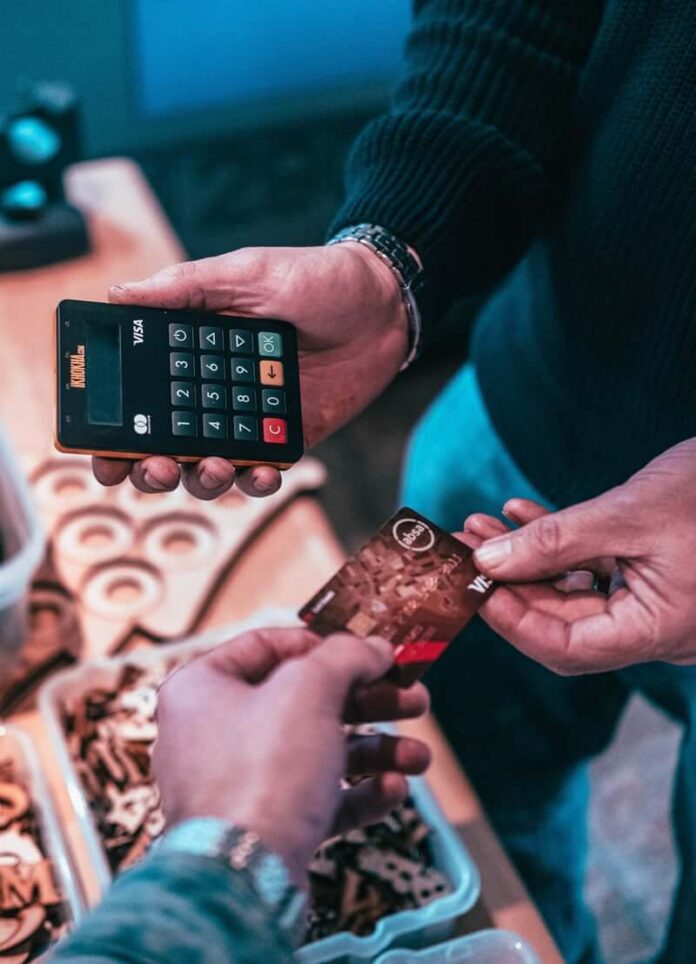
A prepaid debit card is a type of debit card, similar to a re-loadable gift card or stored-value card. You can load it with a cash balance and use it anywhere a particular card network—Mastercard, Visa, Discover, or American Express—is accepted.

How Prepaid Debit Cards Work?

You can buy prepaid debit cards at supermarkets, convenience stores, and many other outlets, as well as directly from the companies that issue them. Because there’s no credit involved—you can only spend the money you put on the card—there’s no credit check required to get one. Though a poor credit history doesn’t hinder your chances of obtaining a prepaid card, having one also doesn’t help you improve your credit score.

You load cash onto your card, either at an ATM or a participating store or through direct deposit. Prepaid cards have account and routing numbers, which can make it possible to arrange for direct deposit of your paycheck or government benefits.

You can make in-store and online purchases, pay bills, or withdraw cash from an ATM. Many of the companies that offer these cards have apps you can use to keep track of your balance, review your transactions, and transfer funds.

prepaid debit cards

Top 5 Astonishing Pros and Cons of Prepaid Cards

Since you have got an idea about Prepaid cards, let’s hop on to the Top 5 Astonishing Pros and Cons of Prepaid Cards.

Top 5 Benefits of Prepaid Debit Cards

  1. Convenient to reload 

    Prepaid, reloadable debit cards enable you to add funds in a number of ways: via direct deposit, transfers from your checking account, purchasing a “reload pack” or adding funds at the card issuer’s institution or certain retail locations.
  2. Limit losses

    You can’t lose more than the balance on your prepaid card, even if you become the victim of fraudsters.

    If you use a debit card instead, its liability protection likely has you covered, but some consumers prefer using a prepaid card when making an online or in-store transaction, rather than putting their full checking account at risk.

    As of April 2019, cards marketed as prepaid are covered by the Electronic Fund Transfer Act; which means card issuers have to investigate and reimburse you for unauthorized charges or errors as long as you file a timely report.

    You may also be eligible for certain additional protections offered by the card’s network. However, in order to get those benefits, you have to register the card with the issuer.
  3. Teach kids how to manage money

    Prepaid cards are a convenient tool for teaching kids about managing money and navigating an increasingly cash-free economy. Some prepaid cards specialize in this market, making it easy for parents to put a child’s allowance or other money on the card.
  4. Keeping money safe when traveling 

    Prepaid debit cards are easily used overseas. And there’s another upside: If your card is stolen, your losses are limited to the amount on your card. You’re not stuck with a drained bank account, damaged credit or lost time recovering funds, Woolf says. “You have damage control.
  5. Reap some rewards

    Some issuers of prepaid cards even have rewards programs, much like credit cards do. The American Express Serve Cash Back card, for example, offers unlimited 1% cash back on all purchases.

    The Walmart MoneyCard offers 3% cash back at Walmart.com and in the Walmart app, 2% cash back at Walmart fuel stations, and 1% cash back at Walmart stores, up to $75 per year.

Disadvantages of Prepaid Cards

  1. No credit reporting

    As mentioned above, prepaid cards, like other debit cards, do not report your transaction information to credit bureaus, so they are of no value if you’re trying to build a credit history or improve your credit score.

    In that case, you may be better off applying for a secured credit card. That’s a special type of credit card for people with a limited credit history or a poor one. A good secured card will report your bill payments to all three major credit bureaus.
  2. Fees—and lots of them

    Depending on the card you choose, you may face an activation fee, monthly fees, transaction fees, and reloading fees.

    Some even assess inactivity fees if you don’t use your card for an extended period of time. Needless to say, fees can add up quickly and drain your card’s balance.

    The Consumer Financial Protection Bureau implemented new rules in 2019 to make it easier to compare the fees on prepaid cards. Now, issuers have to provide a chart showing the card’s fees on the outside of the card packaging, as well as more detailed information on the inside. 

    They also must post fee information online on the company website.
  3. No credit building 

    Although a prepaid card can’t hurt your credit report, it also won’t help you rebuild it. Credit bureaus don’t include prepaid debit card history when calculating your credit score.
  4. Less security 

    The kind of protection you get against fraud and unauthorized charges on your prepaid card varies among card issuers; some card providers have stronger protection than others. But good news is on the horizon: Effective April 1, 2019, the Consumer Financial Protection Bureau new rule will offer guaranteed legal rights for prepaid account users, such as protection against loss and theft.
  5. No FDIC Insurance

    If your bank fails, the government guarantees up to $250,000 of your money in an individual bank account. The same cannot be said for money on a prepaid debit card.

    The best prepaid cards might be eligible for FDIC pass-through insurance,” but they must meet certain qualifications.

Read More about cards: Top Credit Card Companies in the Netherlands

What I Wish Everyone Knew About What Is Netherlands 30% Ruling? What Gets Covered Under Extraterritorial Costs?

0

Being an expat in the Netherlands, one must be well aware of the tax benefits given to them and what costs or expenses get covered in these and this is where Extraterritorial expenses come into picture. Let’s find out what are Extraterritorial expenses and what gets included int these costs.

Before moving to Extraterritorial expenses one must be aware of the Dutch 30% Ruling as these two are tightly coupled.

What is Netherlands 30% ruling?

Dutch 30% ruling is a is a tax advantage for skilled migrants moving to the Netherlands for a specific employment role. This benefit is provided because when you are coming to work in the Netherlands from another country you may experience higher cost of living than you are used to, for instance, because living expense in the Netherlands  might be higher than in your country. So, your employer may compensate you for 30% of the gross salary subject to Dutch payroll tax for your extraterritorial costs untaxed.

What are Extraterritorial Expenses?

The 30% ruling consist of a tax-free allowance of (a maximum of) 30% of the taxable salary of the employee. The 30% tax-free amount is considered to cover extraterritorial expenses, or “ET costs” regardless of the actual costs incurred.

ET costs are costs that an employee would not have incurred if he/she remained working in his/her home country. Regular business expenses are not to be considered ET costs and can be reimbursed in accordance with Dutch wage tax rules.

The employer can decide to reimburse the real ET costs. This can be done if the costs are higher than the 30% allowance or when the 30% ruling is not granted. Based on the definition of ET costs, it may be difficult to determine which expenses qualify as ET costs.

What are Extraterritorial Expenses

List of expenses that are covered under Extraterritorial Expenses

The Dutch Ministry issued a list with costs which are to be considered ET costs under certain conditions and which not.

  • Cost of living allowance for the extra/higher costs in the Netherlands; can be reimbursed tax free as extraterritorial costs
  • Foreign service premium/expat allowance/overseas allowance: will be taxed as normal salary
  • Relocation expenses/ moving allowance: tax free up to a certain level under the normal rules
  • House-hunting/ acquaintance trip: can be reimbursed tax free as normal costs or as extraterritorial costs depending
  • Cost for permits: costs for residence permit application can be reimbursed tax free as extra territorial costs, costs for work permits can be reimbursed tax free as normal labour costs
  • Storage expenses: if the furniture will be moved to the Netherlands then these costs fall under the normal rules for the labour costs otherwise they can be reimbursed as extraterritorial costs
  • Reimbursement for losses (for example on sale or property or car) will be taxed as normal salary
  • Free accommodation/ housing: if a property is kept in the home country then the extra cost in the Netherlands can be reimbursed as extraterritorial cost, otherwise it will be taxed as normal salary but under specific rules
  • Reimbursement for expenses for the purchase of a home/brokers fee: will be taxed as normal salary
  • Utilities: it may be possible to determine these costs as extraterritorial expenses
  • Home leave/ travel costs: travel costs for travel between The Netherlands and the home country are treated as extraterritorial costs
  • Cost of a tax advisor: costs of Dutch tax preparation can be reimbursed as extraterritorial costs
  • Tax-equalization: will be taxed as normal salary
  • Language courses: can be reimbursed tax free as extraterritorial costs
  • Telephone costs: tax free up to a certain level under the normal rules; the part which sees to the extra costs for phone calls to the home country can be determined as extraterritorial costs
  • Food: tax free up to a certain level under the normal rules.

Get Detailed Knowledge about Can You Apply For 30% Ruling? Who Can Claim the Dutch 30% Ruling and For How Long?

All You Need to Know About Keeping Pets in the Netherlands

0

If you are looking to add a cute little member to your family, here is everything you need to know about keeping pets in the Netherlands.

If you plan on keeping pets in the Netherlands, there are several Dutch regulations you will need to adhere to such as registration, identification chips, and tax. This helpful guide covers all the essential information about Keeping Pets in the Netherlands , including veterinary and emergency services and who to call if your pet goes missing.

What You Need to Know About Keeping Pets in the Netherlands?

There are a few steps to follow for Keeping Pets in the Netherlands. Let’s look what we need to do for keeping a dog as your pet.

Registering your dog

For Keeping Pets in the Netherlands all dogs must be registered at the local town hall. The declaration with your municipality has to be done within the first 14 days of getting your dog. Proof of registration comes in the form of a small metal tag on the dog’s collar.

Annual dog tax

Depending on where you live in the Netherlands, you may have to pay an annual dog tax (hondenbelasting) to your local tax office (Belastingdienst). Although many municipalities scrapped this tax, around 200 still impose it. The amount can vary from area to area. The three municipalities with the highest dog tax, for instance, are Groningen at €124.80, The Hague at €120.12, and Hendrik Ido Ambacht at €119.64. The good news is that cats and other pets do not require registration or tax. Check your municipality website for more information about Keeping Pets in the Netherlands.

Identification microchips

As well as registering your dog at the local town hall, you are also required to have an electronic microchip implanted. The chip, which is no larger than a grain of rice, is placed underneath the skin by a veterinarian and contains information such as the pet’s name, address, and emergency contact number. The authorities use this information to identify pets that are lost and reunite them with their owners. Needless to say, it is important to make sure that these details are up to date.

Pet passports

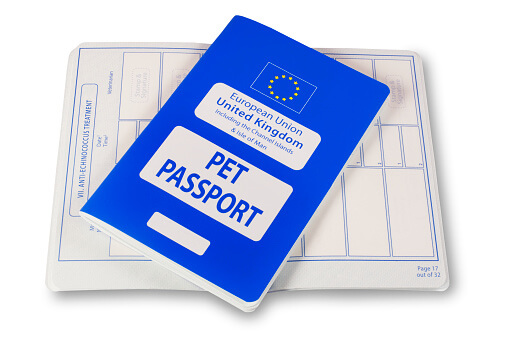
European Union pet owners must have pet passports when traveling with their animals or bringing them into the Netherlands. The passports are to include the pet’s microchip or tattoo number for identification, as well as other data such as records of all vaccinations and clinical examinations.

Pet insurance

Another important thing to consider for Keeping Pets in the Netherlands. There are various insurance policies that can fit your budget and needs. Depending on the level of cover you opt for, these can often cover many of the costs associated with vet bills and treatment in the case of injury or illness. Insurance companies offering pet coverage in the Netherlands include:

If you know your pet is prone to a certain condition, make sure to check that the policy covers this, too. Of course, you will want to check if the insurance provider is established and reputable. This is where reading reviews and asking around within local expat groups and circles can really help.

Walking your dog

You should check with your municipality to find out where your dog is free to walk without a leash and where it can relieve itself. Be aware, though, that you may receive a hefty fine if you allow your dog to do their business in an undesignated area.

During walks, you must clean up your dog’s mess and dispose of it in one of the marked bins. Therefore, make sure that you carry some poop bags with you at all times.

Keeping Pets in the Netherlands

Compulsory training for certain breeds

In 2017, the Dutch government released an official list of 20 different dog breeds that it deems dangerous or high-risk. A new law came into action, making it mandatory for the owners of these breeds to attend a course in keeping dogs with a tendency towards aggressive behavior. Pitbull terriers/crossbreeds, Rottweilers, and Caucasian Shepherds are among the breeds.

In addition, the government intends to set up a central register to record dog bite incidents and a hotline for people to report dangerous dogs or owners who refuse to deal with them properly. If you are considering getting a dog, you can find advice on choosing one on the National Pet Information Centre (LICG) or Minder Hondenbeten websites (in Dutch).

Veterinary services in the Netherlands

The Dutch are great pet lovers and there is a good network of vets and animal hospitals across the Netherlands. You can search online for vets (dierenarts) and practices (dierenartspraktijk) in your area.

Animal ambulance services in Netherlands

If you cannot find an emergency veterinarian (Dieren Spoedkliniek) or a 24-hour service, you can either call the Animal Ambulance (Dierenambulance) in your area or your local veterinarian. Both will list an emergency number for help outside of office hours.

  • Amsterdam: 020 626 2121
  • The Hague: 070 328 2828 / 070 366 0909
  • Hilversum: 035 683 0300
  • Leiden: 071 517 4141
  • Maastricht/Zuid-West Limburg: 090 0443 3224
  • Rotterdam: 010 415 5666 / 010 476 8750
  • Utrecht: 030 273 1600 06 / 065 477 2700
  • Wassenaar: 070 511 7772

Losing and finding a pet

If your pet has gone astray, you should call your local pound or one of the main numbers below. You can also contact the Amivedi Nederland(animal tracing service) on 090 0264 8334. If the animal has an electronic identification chip, you can also report the loss to the national chip database.

  • Amsterdam: Dierenkwijtlijn, 020 470 5000 (choose 1 in menu to report missing pet)
  • Den Bosch: Bosch en Duin, Dierenkliniek, 030 228 3810
  • Eindhoven: Dierenkliniek Dikkertedap, 040 243 2455
  • Groningen: Diergeneeskundig Centrum Paterswoldseweg en Hoogkerk, 050 525 2697
  • Haarlem: Dierenkliniek Meerwijk, 023 533 3363
  • The Hague: Haags Dierencentrum, 070 366 1806 (choose 1 in menu)
  • Maastricht: Dierenkliniek Oranjeplein, 043 363 1818
  • Rotterdam: Dierenopvangcentrum, 010 437 4211
  • Utrecht: Amivedi Dieren Opsporingsdienst (animal tracing service), 030 251 3372

Checkout How to get your 4 Important Utilities Sorted in the Netherlands: Gas, Electricity, Water and more

The Reason Why Car Lease Netherlands is Famous in 2022

0
car lease

Car Lease Netherlands

You want to buy your ideal car but can’t due to financial constraints, which is very understandable. In this smart society be prepared to make smart selections; car leasing firms enable you to do so.

Reasons why you should lease a car

  1. Low monthly instalments
  2. No resale worries
  3. No headache from Maintenance
  4. A new car every few years
  5. No worries about Budget & Payment

Compare car lease companies

Animal Welfare Netherlands: Top 7 Important Rules You Should Be Aware Of

0

We have been using animals to solve many of our daily agendas. Whether it’s the milk we drink or the leather clothes we wear, they’re all the result of animal labor and cruelty to animals.

Animal Welfare Netherlands: Government introduced Top 7 Important Rules to put an end to it and make the lives of  animals better.

The government lays down rules for the treatment of animals. These rules protect their health and well being. Here are

Top 7 Important Rules for Animal Welfare Netherlands

1. Cruelty to animals

Cruelty to animals is a crime. ‘Cruelty’ can be physical abuse or failing to take care of an animal properly, such as neglecting or starving an animal.

You can report cruelty to animals to the Netherlands Food and Consumer Product Safety Authority (NVWA) and the police. They are responsible for tackling this form of crime.

2. Invasive procedures on animals

In general, it is forbidden by law to mutilate or remove any part of an animal for non-medical reasons. Some procedures are allowed, like ear tagging cattle and pigs.

3. Rules for biotechnology research

Scientists can change the genetic make-up of animals (organisms). This is called genetic modification or biotechnology. This type of animal research is only permitted if it:

  • Is in the public interest;
  • Does not excessively damage the health and welfare of the animals used, or cause unnecessary pain;
  • Does not raise serious ethical objections. Alternative research methods, if they exist, are always preferable to methods involving animals.

Animal cloning also falls under biotechnology. Cloning is only permitted for scientific purposes, not for other reasons, such as meat production.

4. Animal testing

Animals are sometimes used in tests to measure the quality and safety of medications, chemical substances and food. There are strict rules on animal testing. It is against the law to carry out experiments on primates or test cosmetics on animals.

5. The Animals Act

The Animals Act 2011 prohibits causing an animal pain or injury or damaging its health and welfare without reasonable purpose or in excess of what is reasonable for such purpose.

This protection applies to domestic animals, and it is not clear whether it extends to wild animals in the wild or in captivity. The Act also requires citizens to give due care to “helpless” animals, and sets out a duty of care based on the five freedoms principles.

6. The Decree containing rules for keepers of animals

7. The Decree concerning permitted veterinary procedures

The various steps taken by the Animal Welfare and government organisations in the Netherlands

The Netherlands has Officially Banned the Use of Wild animals in Circuses

It is now illegal for wild animals, such as lions, bears, elephants, and giraffes, to be used in circuses in the Netherlands! On September 15, 2015, a ban on wild animals in circuses officially went into effect in the Netherlands.

Wild animals, such as lions, bears, elephants, and giraffes, no longer endure extensive travel or life in cramped, poorly-laid-out enclosures for the sole purpose of entertaining humans.

As has been shared before, life for an animal in captivity is not at glamorous as it might appear to be in the ring. Oftentimes, circus animals undergo rigorous training (causing mass amounts of stress) and/or abuse inflicted by trainers seeking to instil fear.

Wilde Dieren de Tent Uit, the association of Dutch animal welfare organizations, has spent the last nine years working towards the ban. The association is now offering to help circuses find new, species-appropriate homes for the animals.

Animal Welfare Netherlands
Elephant Chained

New animal welfare legislation could ‘put end to intensive livestock farming’

New animal welfare legislation passed by the Senate could ‘put an end to intensive livestock farming’, an agriculture department source has told, and may have consequences for pet owners too.

The new law, which was initiated by the pro-animal Partij voor de Dieren and will come into effect in 2023, stipulates that animals can no longer suffer pain or discomfort when kept in cages or stables, and must be able to display natural behaviour.

Top 7 Important Rules for Animal Welfare in the Netherlands

“It’s our duty to take care of our animals and thus we must abide by the rules.”

Checkout What is it like to live in the Netherlands in 21st Century? | Quora Answers Explain Step-By-Step

Facebook Datacenter: Largest DataCenter of Meta in the Netherlands|Zeewolde

0

Facebook Datacenter is coming to Netherlands and it is expected that residents in the Netherlands will be impacted by Facebook’s data center plans.

The country has become a popular location for world-leading firms to invest in Big Tech facilities, but locals claims that the country’s green energy will be depleted.

Facebook Datacenter

Facebook Meta is getting all set for setting the Largest Datacenter of Meta in the Netherlands Zeewolde. The town of Zeewolde, 50km east of Amsterdam approved plans by Meta to build the largest datacenter of meta in the Netherlands from which Facebook, Instagram and Whatsapp can serve users all over Europe.

Although this big development of setting Datacenter of Meta is not being taken in very happy spirit by localities.

facebook datacenter
Metaverse

What are Datacenters?

Modern datacenters are very different than they were just a short time ago. Infrastructure has shifted from traditional on-premises physical servers to virtual networks that support applications and workloads across pools of physical infrastructure and into a multi cloud environment.

In this era, data exists and is connected across multiple datacenters, the edge, and public and private clouds. The datacenter must be able to communicate across these multiple sites, both on-premises and in the cloud. Even the public cloud is a collection of datacenters. When applications are hosted in the cloud, they are using datacenter resources from the cloud provider.

What are the core components of a datacenter?

Datacenter design includes routers, switches, firewalls, storage systems, servers, and application delivery controllers. Because these components store and manage business-critical data and applications, datacenter security is critical in datacenter design. Together, they provide:

Network infrastructure

This connects servers (physical and virtualized), datacenter services, storage, and external connectivity to end-user locations.

Storage infrastructure 

Data is the fuel of the modern datacenter. Storage systems are used to hold this valuable commodity.

Computing resources 

Applications are the engines of a datacenter. These servers provide the processing, memory, local storage, and network

Why are People Not Sure About Datacenter of Meta, A Problem?

The facility, which will use 1.38GWh of electricity and cover 166 hectares (410 acres) of farmland, is expected to run on green energy and provide the local economy a boost but has been criticised by some politicians and environmental campaigners and may become a major concern in coming times.

Despite unease about the wisdom of attracting massive datacenters to the Netherlands, development organisations in the north of the country are still keen to press ahead, the Financieele Dagblad said on Monday.

Both the northern development agency Nom and the Groningen Seaports association say the north can ‘use’ a couple of datacenters, despite the opposition of local politicians, the paper said. Cas König, director of the Groningen Seaports port group, told the paper he is in contact with ‘all’ the big technology groups.

Google data center is the largest datacenter in Eemshaven and, he said, he expects more big names to locate here in the years to come. Plans to build massive datacenters, or hyperscale, in Zeewolde by Facebook parent Meta have run into problems because of concerns about the amount of electricity it will use.

The new government has also pledged to make datacenters a matter for national planning policy. Nevertheless, the northern organisations say the situation in the region is ideal for data farms because of the availability of both energy and space.

However, there must be sufficient benefit to the local economy in terms of jobs, the lobby groups say. The Netherlands is currently home to 180 datacenters and three hyperscales, the paper said and is planning for largest datacenter of meta in the Netherlands.

Datacenters Impact on Environment

Recent predictions state that the energy consumption of datacenters is set to account for 3.2 percent of the total worldwide carbon emissions by 2025 and they could consume no less than a fifth of global electricity. By 2040, storing digital data is set to create 14 percent of the world’s emissions, around the same proportion as the US does today. So the largest datacenter of meta in the Netherlands may add up to the carbon emissions.

If you have any query/complaint with the Netherlands Government Visit the Government’s Facebook Page.

To know more about technology, Checkout our Blogs in Technology Section.

Compare Car Insurance Plans Netherlands

0
Best Car Insurance Plans in The Netherlands

Calculate your Car Insurance Plans

The world is constantly changing, just like you. Your dreams today may be different tomorrow. You are busy with work, family, friends, sports… and of course you also need to get some sleep now and then. In short: you have little time and therefore everything has to be easier, but above all faster. That is why you calculate your premium for car insurance as fast as possible. Compare the car insurance plan that suits you and your car.

While there are numerous choices, think about your requirements before signing a contract.

Best Car Service Chains in Europe

List of Number of Countries in the World

0

There must be a lot of wondering on how there is a whole article for mere one word simple answer to the above question. The answer to the question of How Many Countries Are There in the World is not as simple and obvious as one would think because it depends on how you look at it. 

The UN recognises 193 countries and two non-member observer states making it a total of 195. So a lot of people will stop there, at 195. 

But this figure does not include two nations that have been widely recognised as countries, although not fully endorsed by the UN because of special veto powers: Taiwan and Kosovo. 

So, in my opinion, a more comprehensive count is 198: 193 UN members, 2 Non-member Observers, 2 partially recognised nations and Tibet.

List of Number of Countries in the World
Netherlands

What is a country?

The definition of the word country is simple, but the agreement around what actually makes a part of the world a country is not straightforward.

In the dictionary, a country, often used as synonymous for state, is “a nation with its own government, occupying a particular territory”, and a nation is “a large body of people united by common descent, history, culture, or language, inhabiting a particular country or territory”. 

Thus, a country is a group of people with shared heritage that occupy a specific territory. You need three components to define a country: people, territory and government. 

How Many Countries Are There in the World?

The question of How Many Countries Are There in the World is particularly relevant for those seeking to beat world records by visiting “all the countries in the world”, as it determines the denominator in their quest. 

Do they need to visit 193, 195 or 197 countries? Do they have to make it to Palestine or does Tel Aviv count?

In a nutshell, the number of countries depends on who you ask and you will have to determine whose opinion you respect most and create your own world view. 

As mentioned above, I count 197 countries (UN countries plus Kosovo, Palestine, Taiwan and The Vatican), others stay at the 193 UN-recognised number of countries, some go as high as 267.

To help you decide on your list of countries, below is a table with various numbers of countries as per various lists, and in the next sections, I will look at each of them and give you arguments to decide if you count it or not.

List of Number of Countries in the World

Type of country-counting listNumber of countries considered
UN Members193 countries
UN Members + Observer countries195 countries
UN Members + Observer countries + Partially recognised territories200 countries
Countries with Olympic teams206 countries and territories
UN Members + Observer countries + Partially recognised territories + self governing territories208 countries and territories
UN Members + Observer countries + Partially recognised territories + self governing territories + non-self-governing territories225 countries and territories
CIA World Factbook267 countries and territories
Travelers Century Club327 countries and territories

Fact

According to databases, there are 267 “entities” that are being tracked. This includes all of the UN Countries, all the non-members, some of the disputed territories, some of the non-self-governing territories and some more, usually islands or clearly demarcated territories with any sort of geographical identity.

Places like the Christmas or Cocos Islands, the Arctic regions or the Gaza Strip all have their entry in the database, as do esoteric places like the British army base of Akrotiri, in southern Cyprus. Yet South Ossetia, Somaliland, North Cyprus and Abkhazia do not. 

Wasn’t that information about How Many Countries Are There in the World interesting? Let us know in the comments.

To know about what an amazing country Netherlands, Read Netherlands Culture and Traditions Since 17th Century “Rich and Diverse” – Dutch Pride

I Amsterdam City Card | 5 benefits and Why You Should Get One in 2022

0

There’s no denying in the fact why Amsterdam is known as Europe’s best city for the visit after being known about the beauty and the glory that Amsterdam has. From museums to attractive places to unique pilgrimages, Amsterdam is full of such kinds of glorified kinds of stuff that people from all over the world loves to witness once in a lifetime.  

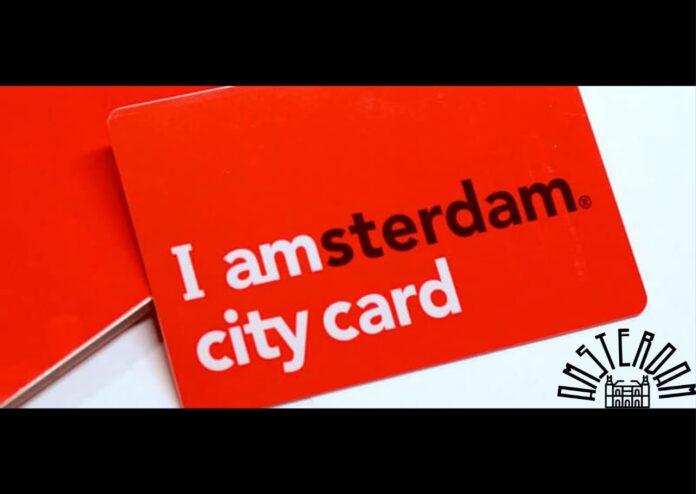
I Amsterdam City Card

But to witness all of these glorified things, one needs to have the essentials like – Tickets and passes which in doubt are the costliest ones to cover all. But, there’s always a solution for every problem and the solution is – I Amsterdam City Card. Yes, Amsterdam City Card allows you to visit varieties of glorified and attractive places in one go and allows you to be in a less stressed state for your wallet.

The best and most common one among various City Cards is – I Amsterdam City Card. Let’s understand what I Amsterdam City Card is and where it can take us up to –

I Amsterdam City Card –

With numerous sight-seeing, sightings, and places to visit, I Amsterdam City Card prevents our wallet to not to went empty by giving us numerous places to access. I Amsterdam City Card acts as an aid here by giving free access to major famous locations in a One-Go-Method.

Free Entrance and Significant Discounts with I Amsterdam City Card –

I Amsterdam City Card allows you to have a free entry with a significant bumper discount at some of the famous spots. A’DAM Lookout Observation Deck is one of Amsterdam’s most famous visiting spots before 6.00 pm and I Amsterdam City Card allows you free entry into it. Even, in addition, you will be receiving free admission or a heavy discount on your visit to Haarlem, Zaanse Schans, and Volendam.

Free transportation benefit in I Amsterdam City Card–

I Amsterdam City Card allows you to get free access to the public transport facilities like – Tram, Metros, and Buses. Also, you will be allowed to rent a bike for a whole day long with the I Amsterdam City Card which indeed is a much better option for the riders and bikers who loves to ride while traveling and visiting.

Access to Museums and famous sightings for Free by I Amsterdam City Card –

Much awaited and most important factor that keeps ongoing at the time of planning a trip is of the costly ticketing and the entry fees as some famous attractions charges less and some charges high. But, I Amsterdam City Card provides you with a facility where you will be having free access to the 70+ Museums including Van Gogh Museum and the Rijksmuseum, a Canal Cruise over Amsterdam’s historic canals, and so on. Providing access to 70+ Museums and many famous highlighted sightings for free is what makes I Amsterdam City Card the most valued and common purchase among tourists.

I Amsterdam City Card Pricings as per 2022 –

I Amsterdam City Cards with day-wise prices.

I Amsterdam City Card Pricings as per 2022 is as follows with the time-limit –

€ – 65     = Validity of 24 hours
€ – 85     = Validity of 48 hours
€ – 105   = Validity of 72 hours
€ – 120   = Validity of 96 hours
€ – 130   = Validity of 120 hours

Working of I Amsterdam City Card –

  • Order your Card Online

You can order your I Amsterdam City Card online after choosing which one you want to buy. Either you can collect it from the Amsterdam Central Train Station or can be delivered to your Home or Hotel Address.

  • Activate your Amsterdam City Card

As Card is fully automatic, you don’t need to do anything. I Amsterdam City Card have two categories –

Public transport and Museums and Attractions – This works automatically as per the requirements. But it is activated only the first time your visit Amsterdam’s attractions, museums, or public transport.

  • Use your Card

For the Public Transport – Only thing you need to do is to just swipe your card for any of the given public transports – Bus, Tram or Metro at the time of arrival and departure.

For Museums and Attractions – Currently due to the COVID-19 outbreak and safety measures, you need to book your time slots in the given Museums and Attractions online before the visit to avoid any consequences.

Must read about COVID – 19 Travel Updates – covid-19-important-travel-update

Learn Dutch Online: Online Inburgering Course for Dutch Society Exam

0

Ever wished to have all the knowledge about Dutch Society? Ever wished to crack Netherlands’ integration (inburgering) exams in one go? So, there is a good news for the learners. The Education system in the Netherlands has introduced new Online Inburgering Course for Dutch Society Exam (inburgering) exams to simplify the preparation.

What is Inburgering?

If you’re from a country outside the EU and you want to move to the Netherlands, you need a Dutch residence permit. To get this, you are expected to take a civic integration exam, het Inburgeringsexamen. That also goes for those who apply for Dutch citizenship (getting a Dutch passport).

The purpose of this exam is to learn the Dutch language as well as other aspects of Dutch culture and society. The exams are organized by the Dienst Uitvoering Onderwijs or DUO. 

We got to know what Inburgering is and how important it is for Dutch Citizenship and Dutch people. Let’s get some good news about it.

Good News!!! Online Inburgering Course For Dutch Society Exam

New Good News!!! Online Inburgering Course For Dutch Society Exam Nawijn, who launched his online exam preparation course Inburgering Online in 2021 to help students pass the four language papers, has started the new year by adding a new course to the programme to prepare them for the KNM exam. The KNM course − Kennis van de Nederlandse Maatschappij, in Dutch – is essentially a survival guide to living in the Netherlands, covering topics such as work and income, housing, and Dutch history and geography. Nawij says,

“It’s actually great, the exam”

Dutch teacher Bart Nawijn says,

“They are very free and very organised”

– that’s the overwhelming impression candidates get of the Dutch when they have completed the Knowledge of Dutch Society (KNM) component of the Netherlands’ integration (inburgering) exams.

“Even for people for whom it is not mandatory, it’s good to learn about the country.”

Learn Dutch Online
Learn Dutch Online

Perks of Online Inburgering Course for Dutch Society Exam

Books Despite being very useful, the problem is that much of the content is ‘borderline boring’. Furthermore, the books that candidates currently have to learn from are in Dutch and feature language beyond the A2 level most candidates are required to reach for their inburgering. (For newcomers becoming inburgeringsplichtig (legally required to integrate) after January 2022 the level will be B1. For all people who were already inburgeringsplichtig before January 2022 and people applying for permanent residence or citizenship in 2022, the level remains A2.)

‘If it’s difficult to learn, then it’s a missed opportunity,’ says Nawijn. By contrast, his online course uses English to translate difficult words such as zorgverzekering (health insurance) and opzegtermijn (notice period), and to share information about the exam format and study tips. “I’ve tried to make a bridge between the required level of language needed to pass the exam and what students need to learn about Dutch society,” explains Nawijn.

Videos

And as for those tedious but important topics − tax rebates on mortgage payments, anyone? – Good News!!! Online Inburgering Course For Dutch Society Exam aims to make them ‘as accessible and comfortable to learn as possible’, says Nawijn.

His upbeat presence on the videos guiding you through each of the eight chapters is intended, he says, ‘to make it a bit more cheerful, to make sure people stay engaged’ and to ‘take as much as possible of the burden of studying for this exam away’.

As well as 240 practice questions, two practice exams and a study schedule, the course includes practical information about the exam and strategies for success. One memorable tip for the amusing ‘Dutch norms and values’ section, for example, is to avoid responding to questions based on your own culture or opinion, but to consider instead what a Dutch person would do.

Are the neighbours making a racket? Confront them about it directly. Visiting friends? Do not expect a meal unless it’s in the diary.

Better Efficiency

A knowledge migrant from Australia who passed the KNM exam in January, and also studied for the language exams through Inburgering Online, told DutchNews.nl that he found the exam technique advice especially helpful. ‘He [the teacher] takes the student through a meticulous methodology of analysing the keywords in the questions and multi-choice answers, and then shows us how to exploit this to our advantage to find the correct answer,’ he said.

Inburgering Online, he said, was ‘seamless to navigate’, and he liked that e-learning let him to set his own pace. ‘I sometimes find in-person classes a little frustrating because I cannot blitz rapidly through certain parts and slow down or repeat other parts,’ he said. ‘With the online mechanics, I can easily do this and maximise my learning efficiency.’

Very helpful

Having passed the KNM exam in less than half of the 50 minutes allocated, some people are a big advocate of the new course. Describing Inburgering Online as ‘very thorough’ and ‘user-friendly’. In particular, Leonid appreciated the personal touch that the videos added. ‘With the book you’re left alone and have to sort things out for yourself,’ he added.

The online course is all praises and praises!!!

People who used it have become fan.

“I like that I can actually see someone. You get the feeling like he’s coaching me, coming on the journey with me.”

“If people want to pass, this is the tool to use.”

Costs: The KNM course with Inburgering Online starts at €12.95 a month or comes free when you subscribe to all four language courses. Sign up before the end of February 2022 for a 50% discount. To find out more about the subscriptions offered by Inburgering Online, visit their website.

Read about How to Register in Municipality in the Netherlands.